
Looking to the Far East for a new approach to Shopping Mall management benefits consumers, landlords and tenants alike

In light of the recent mega-mergers in the retail property/shopping mall sector, and the move to a more experiential approach to attracting footfall, Phillip Moylan, Sales Manager at Eurostop explains how a partnership approach to managing retailers could yield benefits all round. At the end of 2017 we saw two large mergers in the retail sector. French company Unibail-Rodamco and its proposed acquisition of Australia’s Westfield Corporation, and the takeover of Intu by Hammerson, both UK based companies. Both deals are expected to bring new ideas particularly around evolving shopping malls into leisure destinations with cinemas, and more food and beverage outlets, as well as more flexible and vibrant retail space. The rise of the ‘supermall’ Industry pundits are underlining what we’ve all known for years, that fashion and footwear retailers are looking to the so called ‘supermalls’ to create large scale stores and moving away from town centres. Out-of-town shopping malls are switching their focus and are increasing their upmarket food halls, restaurants and bars, and looking for tie-ins with other leisure facilities such as cinemas and bowling alleys, as well as keeping a good mix of tenant retailers. But what is the right mix? We know that good malls need anchor tenants, those that attract large numbers of customers, and they also need to have a reasonable turnover of fresh, new brands to excite consumers and keep them coming back for more. However, without the anchor stores, or if occupancy dips too low, the mall is almost certainly destined to fail. So there is no doubt that attracting the right tenants is critical. Add to this the challenge of ensuring that high performing brands get a prime position to encourage visitors and subsequent sales, and landlords are looking at a very fine balancing act. Making sense of the data A Tenant Management System (TMS) helps landlords to gather the sales and footfall information they need to make fact-based decisions, to ensure that their assets perform and that their marketing is effective. Landlords are reliant on good data, however, without the appropriate technology that can be difficult to come by. With a good TMS landlords are able to track turnover by square foot, and see the percentage turnover by product, brand or retailer. In addition they can match footfall to turnover, retailer, product sales or brand. This enables the landlord to optimise the space, by offering successful and sought after brands premium positions within the mall, or possibly two positions in different locations. The information is collected via WiFi (so no cabling required) from the retailers’ EPOS systems. Alternatively, retailers can complete manual returns, which can be useful for po-up stores and the like. Lower rents, higher performance – a more vibrant mix In the Far East where the mega-mall shopping culture is arguably ten years ahead of the UK, rents are typically a mix of price per square footage, and a percentage of turnover/sales. This means that rents can be kept lower, encouraging new brands to the mall. Those brands that are highly successful generate more income for the landlord, and it is therefore in the landlords own best interest to ensure that they have a prime location within the mall. With the data that shows the location of sales, landlords can see the hotspots within the mall, and so allocate accordingly. Tracking marketing success Having an overall view of sales means that landlords can see the result of specific marketing campaigns. So for instance, a special offer designed to increase traffic on a quiet day of the week. Further analysis can show if visitors increased and whether the conversion rate to sales was maintained. This can be particularly useful when promoting complimentary leisure activities, or offers in the mall bars and restaurants. An example of a highly successful temporary store and promotion was in 2016, when technology company Samsung achieved 125,000 visitors in less than three weeks to their pop-up store in Westfield White City. Eurostop clients that are currently benefiting from the TMS include Frasers Centrepoint, Tanjong Pagar Centre (GuocoLand), Katong Square and SingPost, all in Singapore. By combining a fixed price element to the rent, with a performance related element, shopping mall owners are able to attract new, up and coming brands to help create a fresh and vibrant mix, while also earning more from the most successful tenants. A TMS enables landlords to collect the data required for this type of arrangement, and also delivers many more benefits in the overall management of the mall. Not only does the landlord win, but so too does the retailer, and ultimately, the customer.
Eurostop is listed in Insights Success ‘The 10 Best Performing Software Solution Providers 2017’

Eurostop is featured in Insights Success, December 2017 edition: The 10 Best Performing Software Solution Providers 2017 We were very pleased to be featured in Insights Success, with a story on Empowering Retailers with EPOS and Stock Control Software Read about my thoughts on: the retail industry tackling internationalisation and the future with Award winning EPOS and Stock Control software One EPOS solution connected across your business and retail channels for a connected customer centric experience Read the full article in Insights Success
Festive fun at Eurostop

With the festive season upon us, we decided to have a little fun with our Secret Santa and Christmas Jumper Day 2017! There were some very bright outfits that raised a smile, unfortunately the photos don’t quite seem to do the array of flashing LEDs justice! Judging the competition was our special guest Mark Tiling from Leventis Overseas. Thank you Mark for joining us, and congratulations to Roy Meunier, who won the Eurostop Christmas Jumper Day competition 2017! Eurostop takes a festive break on the 25th December, and reopens again on the 26th. We wish all of our customers and partners warm wishes for the festive season and look forward to working with you all in 2018.
Eurostop’s Tenant Management System as advertised in Retail Week (November 2017)
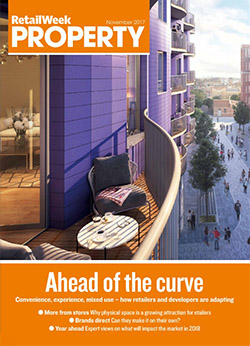
Richard Loh, CEO and Founder of Eurostop, talks about the product that has already had major traction in Asia; now being released in the UK and Europe. As advertised in the November issue of Retail Week Property Supplement. Eurostop’s Tenant Management System now available in the UK & Europe New turnover based rental model is designed to keep shopping centre space leased 2 months free trial available (available in the UK & Europe, terms and conditions apply) Our Tenant Management System, e-mall, is already in use by leading shopping mall operators in Asia such as SingPost, Tanjong Pagar, Frasers Centrepoint Malls and Gardens by the Bay. I’m pleased to let you know that it is also now available in the UK, offering a new way to manage your retail tenants and F&B tenants. It will allow you to optimise the way in which you lease your retail space. I think it’s a great time for shopping centre owners, or any owners of retail or F&B leased space to consider this model. With new digital channels, the physical space has still proven to be an equally important part of a brand experience, however economic uncertainty along with the changing retail landscape mean that landlords must also adapt to maintain footfall and lease occupancy. We have seen that retailers can struggle to keep up with the high annual rental lease options offered by shopping centres in the UK. It leaves them with limited cashflow and can mean that they have to reduce their physical footprint. This can leave landlords with empty space, which isn’t good for the shopping centre. Using a rental plus commission/turnover model, shopping centre owners can offer a more flexible partnership, so that their retailers can have more fluidity with day to day cashflow. I also encourage landlords using our Tenant Management System to take advantage of the live and on the go reporting available in our system. Being able to react to seasonal, daily and even hourly fluctuations, and retailer promotions means that they can use these valuable insights to see what is working and drive further footfall. I can also let you know that we are soon to release further reporting for tenants that will help the retailers to strategise as well. If a retailer is doing better, then ultimately, this benefits the shopping centre and keeps the space filled. Free 2 month trialWe are offering a free 2 month trial of the system in the UK and Europe. If you are interested or want to talk about the free trial, please get in contact with a member of my team.
Celebrating three milestone anniversaries

Last month, we marked three special dates. Sab Sothinathan and Kumar Ramanthan started with the company 20 years ago and Sanjay Pote celebrates his 10 year anniversary with Eurostop in 2017. We want to congratulate all three of them on their special milestones and most of all thank them for all their hard work. They join what is fondly known as the ’10 and 20 year clubs’ at Eurostop. Sab Sothinathan, who started as a Clipper programmer, has built up a wealth of experience over his career and now uses his expertise to provide application support in the specialised area of ticket printing, said I have had many challenging but rewarding experiences throughout the past 20 years at Eurostop Richard Loh commented It’s great to have such long serving members of staff. They have been with me since near the start, and it’s really nice to see their personal growth, along with that of the business. I would like to thank each of them for their dedication and support. Congratulations Sab, Kumar and Sanjay!
GDPR – the new Data Protection Legislation & Omnichannel Retail

With the General Data Protection Regulation (GDPR) due to come into force on 25th May 2018, retailers are starting to consider what it will mean for them. The new legislation will override national data protection laws including the Data Protection Act 1998 and include new and more detailed protection for personal data. Briefly, GDPR encompasses how data is managed, processed and deleted and includes all of a company’s data dealing with EU citizens, in marketing, sales and finance and CRM systems. It also contains a raft of new rights for individuals – (often called data subject rights) which include the right to data portability, to be forgotten and a strengthening of access to their data or data access requests. For many retailers it will mean a review of data policies and practices to ensure that they comply with how data is kept throughout the organisation. What’s more, there will be a high price to pay for organisations that fail to comply with the legislation. Punitive fines of up to 4% of an organisation’s annual global turnover or €20m, whichever is greater, not to mention reputational damage, are not to be taken lightly. What does GDPR mean for retailers? There’s no doubt that there will be some challenges. In today’s market place successful retailers are those with high rated customer experiences. Whether marketing to customers directly or providing a service instore, the customer experience is also now ranked as a top priority on most boardroom agendas. Yet it’s important to remember that effective CRM can only be successful with good data – and that means good data management. With GDPR an even more meticulous approach to data management will be required, even perhaps a new mindset and culture shift in relation to data. Thinking about these challenges we’ve identified three key areas relating to data to consider: 1. Customer profiling and promotions Many of our customers use a CRM system to automate the collection and use of customer data for loyalty cards and special promotions, both instore and with email campaigns. With GDPR it will be important that not only do you gather explicit consent for storing customer data, but that you also maintain auditable proof of this consent, and are able to retrieve records easily, whilst also providing your customers with the opportunity to object/opt out. In fact, the regulation gives far more power to the individuals and gives them the right to know how their data is being processed. This is where it is really important to clarify to the customer the reality of how you plan to use their data, and of course, the tangible offers that you will be giving , to make it worth their while agreeing. 2. Security and breach notification Another important part of the new legislation is that any data breaches must be notified within 72 hours to the regulators – and in some cases to your customers. It’s essential that all companies – and this includes retailers – are prepared to act should a breach occur. In fact one of the biggest risks in any organisation relating to data is not the processes that are put in place but staff – not necessarily from fraudsters or malicious intent, but people just not taking proper care of data. Forewarned is forearmed, so it is important to train your staff on GDPR and the changes it will make. Employing or designating a Data Protection Officer and the relatively low cost of training and education of the risks involved can go a long way towards making staff vigilant to perils such as phishing emails and fraudulent representation. The staff should therefore be notified of the risks to the company (financial and reputation), as well as the risk to themselves (possible disciplinary issues, dismissal, redundancy) and know what they should do in the event of a data breach. 3. Sharing data with third parties Working with our clients on integrating systems, we know that retailers often use specialist suppliers for different aspects of the business – for example, ecommerce, delivery and logistics providers and marketing agencies. Now is the time to dust off the agreements you have in place with third parties and make sure that security measures and breach actions are included, where transfer of personal information is involved. Also remember that customer preferences such as the right to be forgotten and opt out, must be synchronised effectively across systems. But will GDPR still apply if we are leaving the EU? GDPR has been agreed and ratified by the EU. The UK may be leaving the EU but this legislation will remain in effect in the UK until further notice. Taking your first steps to GDPR While these three points may at first be daunting, in fact they can easily be managed with integrated systems and the right technology and processes. Our systems help retailers capture and track customer details and consent, and will allow you, the retailer, to manage GDPR issues and together with effective processes and workflows, ensure data compliance. It’s certainly worth considering these data areas in your company now, as your first steps towards GDPR. The more advanced your organisation is along the way to compliance, the lower the risk of breaches occurring once GDPR comes into play. If you would like to discuss further, why not contact Eurostop and speak to a retail expert.
Treading carefully over the threshold into bricks and mortar
Many successful online retailers are expanding their business into bricks and mortar stores, using the opportunity to retain and upsell to loyal customers while attracting new devotees to their brand. Here are the key things a retailer should consider before stepping across the bricks & mortar threshold. Image sourced from Stephen Brashear/Getty Images The relentless rise and fall of online retailing The successful online retailers are those who realise both the importance of clear concise marketing messages and a product that is of good quality and desirable. The influence of social media – blogs, Instagram and Facebook – to attract new shoppers cannot be underestimated as the foundations of success for online retailers. Therefore it is vital for business success that fashion retailers ensure they harness these latest technology trends, to ensure that they proactively communicate with their customers. Ultimately retailers have to remember that the mantra “the right product, in the right place, at the right time” will always be fundamental to the business. Ultimately retailers have to remember that the mantra “the right product, in the right place, at the right time” will always be fundamental to the business. However, the retail market is changing, and we are seeing a merging of online and bricks & mortar. The latest trend for online retailers is to expand their presence onto the high street or shopping mall. A changing landscape While the number of transactions on online products is still rising, the market has become very crowded. The costs associated with online retailing have been steadily increasing. The design and navigation of a website needs be attractive (particularly in the fashion and accessories industry), easy to use and regularly refreshed, in order to attract revisits. In addition, companies are now spending considerable amounts on marketing online to attract visitors, and with the larger companies competing for the same customers, the costs to promote keywords for search engines have increased. A considerable investment in systems is necessary to ensure accurate order fulfilment, and they need to be scalable to allow for future expansion. All of these costs can have a massive impact on a retailer’s bottom line and profit margins. We are also seeing a shift in customer attitudes. Certain functional products will always be sold purely on price, however, with fashion and high value jewellery items there is a marked difference in the buying decision. Of course, price is still important, but design and brand are also key factors in choice. Customer loyalty becomes a sophisticated mix of factors and preferences derived from a particular demographic, defined by age, sex, work, lifestyle – even geographical area – which the canny retailer will have defined in their customer profile in their CRM system. Why bricks and mortar makes sense Increasingly shoppers demand a customer experience as part of their brand expectations and loyalty. It has been claimed that Millennials in particular are brand conscious and moving towards ‘experience shopping’. Online businesses are very good at tracking customer purchases and trends and using this information they can quickly identify the best location, which products to sell – even where to promote the new store. The result – online retailers investing in high street stores, premium spaces in out of town shopping centres or designer outlets, to enable customers to try before purchasing. The latter also provides a channel for retailers to sell additional products that sell better instore rather than online. Starting with a particular geographical area where the online purchases highlight a significant customer base, an online retailer can enjoy immediate success with a new store opening. The physical store establishes or enhances the brand and provides the customer with the all-important tactile experience when purchasing new products. Enabling customers to try before they buy can reduce the number of returns. If successful, a retailer might then decide to open more stores in different areas, near to where other customers live, to meet demand. Taking the first steps Accepting that the move to bricks and mortar is both a necessity and complementary with the online business, there are a few things to consider before branching out; With multiple outlets it’s important to have good retail systems that provide visibility of stock. A central connected system that can track whether stock is in the warehouse, in different stores or even in transit, is invaluable for meeting customer demand and forecasting sales. Being able to access stock records can help staff to provide a better customer service in store. The location of stores is important – is there easy access by car or good transport links, what are the opening hours or other facilities on offer? What sort of retailers do you want as neighbours? Located next to competitors may bring new customers, in the same way you may not want a high street location alongside stores completely different from your business. Destination retailers with a strong brand identity may wish to have a second store, while an outlet clearance store is useful to sell heavily discounted items that have been returned or damaged. A careful balance needs to be achieved between the store and online prices. While an online business relies on fast turnover and a refresh of stock, customers may only visit stores every few months and so items may be kept longer. A retailer needs to be careful to remain competitive while not eating into their store margins or devaluing the brand. Although online costs have increased, a bricks and mortar store is not a cheap alternative and requires a different cost model. Staff working hours may need to be longer to fit in with other stores close by and the cost of local marketing such as billboards and local press used to establish presence needs to be factored in. Renting premises may require a longer term financial commitment dependent on the leases available. Some leases may also specify fixed terms and notice periods, important for cost forecasts. Not only is location important, but also the physical space that
Is Bricks and Mortar in Terminal Decline?
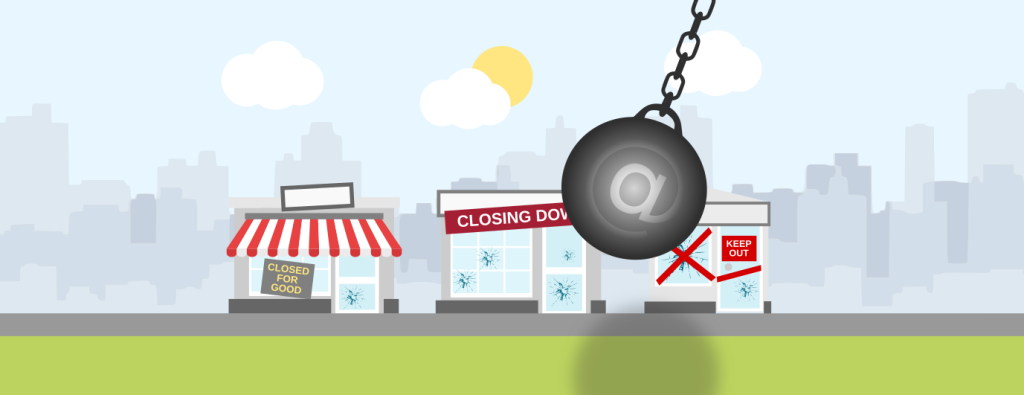
Recently I read this blog about how bricks and mortar retail is in decline. There are some persuasive statistics to back up the byline, but personally I can’t help but feel excited about the potential of what is to come in physical retail spaces, if only retailers can get it right. Digital disruption need not spell the end for bricks and mortar stores. Instead focusing on changing consumer expectation, behavior and needs for a new generation could re-imagine a whole new retail environment, where digital needs to be embraced. ‘Omnichannel ‘ is the buzzword of today, but surely the utopia is where there are no longer perceived ‘channels’ but the physical and digital merge so that all retail touchpoints are one of many on–demand interactions with the brand? The Professor professes to a lack of customer service in traditional stores, and I have to say that as a consumer I do often find this to be true, but why not use digital technology to assist and differentiate, rather than shut them down? why not use digital technology to assist and differentiate, rather than shut them down? As Millennials, also known as Digital Natives or Generation Me, enter their prime spending years,it seems clear that they will drive a ‘Customer centric’ approach to products and services. Surprisingly, the physical store continues to be important in their journey to purchase, they just expect more out of the experience. Retailers need to get to know their new friends, who are described amongst other things, as tech-savvy, impatient, demanding and social. By adapting the in-store experience to suit the wants and needs of the new generation, those retailers will make sure that they stand tall above the rest. The physical store continues to be important in their journey to purchase, they just expect more out of the experience. On the high street there are stories of retailers succumbing to current pressures, but turn right, and you will see shining examples of those who are evolving and changing the status quo with a new level of technology and services. Online retail certainly has choice, convenience and value for money on its side, but shouldn’t retailers build on the unique value proposition of the high street as part of its offering? Better in store customer experiences I stand in awe at the retail giant that is Apple. Their minimalist stores are always packed, and yet upon purchase of one of their items in store, I come away impressed with the service and thought that they have put into the ‘Apple experience’. As I browse and test out the latest devices that are conveniently Wifi connected (I can indeed participate in the worrying trend of ‘showrooming’, or simply check out some online reviews), I can’t help but notice another customer, who has been bought an Apple Watch by her husband as a birthday present. She is not rushed to complete the transaction (by mobile payment, while seated at a bench), but is then offered help in setting up her new purchase. Surely this goes against the grain of serving more customers in less time? I imagine that she will return home excited and show her newly ‘connected’ watch and experience with her friends – the best type of brand ambassador. Embrace the physical space The pure play etailer Missguided has recently opened 2 new stores in the UK. The visual experience in store doesn’t disappoint and is a 3-D extension of their brand persona, brought to life in the physical realm. No longer is a shop just a shop, but an inspiring and entertaining place to be, and you want to go back for more – pop culture language is inherent in all the décor, and talk of unicorns just takes you to a fun place where you might hang out with friends – which they hope you will be. The constant and live stream of fashion inspiration on the immersive digital displays brings the digital and physical world together. It seems like the investment in store design paid off. This online success story now has a place you can visit, why wouldn’t you want to hang out and share on social media? Get to know them There are many other examples of brands that are building relationships with us. In an age where we are no longer limited by geographical boundaries, consumers have endless choice and information at the touch of a screen. Retailers really need to be on the ball in nurturing personalized and engaging relationships with their brand. With a wealth of digital analytics and data available, by implementing the right tools and technology, retailers can get insights into the preferences of their customers and adjust their marketing and promotions accordingly. For example notifying customers of offers that they are likely to be interested in, based on past shopping history. These promotions have to be seamless across physical and digital ‘boundaries’, because the consumer of today expects nothing less. Understand your customers, not only how they like to shop, but their lifestyles and the communities that they live their lives in. Convenience is key and retailers need to determine the preferences of their demographic. For example, if their customer base has a large mobile following who engages on social, they need to make sure that they have a slick mobile app with built in social sharing to the right platforms. Understand your customers, not only how they like to shop, but their lifestyles and the communities that they live their lives in. Right here, right now Millennials have grown up with smart phones. This hyper connected generation always has their devices on hand – accustomed to getting what they want, when they want. This urgency also applies to expectations for services in store. This hyper connected generation always has their devices on hand – accustomed to getting what they want, when they want. Certainly from a personal point of view, I have walked back out of a store, if I see that there
Planning for Brexit – are you ready?

Richard Loh, CEO and founder of Eurostop, talks retail and planning for Brexit Retail is the bellwether for the state of the economy. If there’s a slow down the retail sector feels it first. Britain is used to dealing with difficult trading conditions, so how is Brexit any different? The biggest issue facing the retailer in my view is the strength of sterling in the current economic climate. Fluctuating exchange rates mean that retailers may need to reconsider how they source their goods and services. Dealing with Eroding Margins Exchange rates are expected to remain volatile, due to the uncertainty of Brexit. Sterling has already weakened, making purchases from overseas more expensive. These extra costs must either be absorbed, lowering margins, or passed onto the consumer. Most retailers will probably end up doing a bit of both. As we all know, when margins are eroded, that increases the pressure to sell more. This is where brand awareness and customer loyalty comes into play – retailers that have a strategy for increasing engagement and keeping customers coming back are the ones that are going to remain or even gain market share. On the flip side of the coin, early 2017 realised the predicted Brexit tourism boom, which has seen increased spending from overseas tourists in the UK. This is an area that you can’t afford to ignore. Of course, sourcing from the UK is also worth considering, which has the added benefit of reducing lead times and supporting the UK economy. Customer Experience is King Even in the aftermath of the post Brexit vote and falling pound, British retailers were whipped into a storm of price reductions and competition, in an effort to win customers. Savvy consumers are driving retailers to change. Those retailers with the insight to look at re-imagining their business strategies and adjusting to changing consumer behaviour will remain in the long term. Consumers aren’t just interested by the product you have to offer, but just if not more important, is the service and experience that you can provide. This is where retailers need to use technology to ensure a quick and consistent service to complement their product and brand, and stand out from the competition. Digital disruption, Artificial Intelligence, the Internet of Things and Big Data are all emergent technologies that will see the future of retail change with an ever more customer-centric and personalised approach. I guess the message here, is that in a more competitive Brexit era, we all have to work a little harder to stay ahead of the game. It’s the consumers who are dictating which court we need to play in. 52% of B2C customers stopped buying after a bad customer service interaction* Market Rationalisation Opportunities As ever when we are facing a storm, some retailers will flounder and others will sail through, all the stronger. For those that are supported by enabling technology, there will be opportunities to acquire more market share, either by acquisition of competitors, or by expanding to fill gaps left as competitors leave the market. Currency exchange rates may yet move back the other way, restoring margins and putting retailers in a better position. Here are my top tips for making a success of Brexit Five top tips for weathering the Brexit storm Start planning now. We all know it is coming. Start looking at your supply chain, negotiate with suppliers, wholesalers and manufacturers to get the best terms possible. Find alternative suppliers if you need to. Put your business on a solid footing. Take a fresh look at your operations. Trim the fat where you can, re-organise where you need to, and ensure that you have the technology to support a more efficient and competitive approach going forward. Look to improve your Customer Experience. Is your brand consistent and connected across all channels? Time, convenience and excellent customer service are now key differentiators for customers – can they get what they want, how they want and with least fuss? Build Customer Loyalty. Think about what you can do differently to build loyalty? Knowledge is power, so start by ensuring that you are collecting customer data, to use for more personalised marketing – show your customers that you care, and focus on building relationships. Keep them happy as they are your most powerful brand ambassadors. Make the most of your capital. In this challenging time, you need the right technology to make the most of your available stock. Have the right stock, at the right time, in the right location – are you making the most of every potential sale opportunity? You need transparent systems that are going to give you the information that you need quickly and with the least amount of work. *According to a report by Dimensional Research
What every retailer needs to know when going international

Four key steps when looking to expand overseas – Richard Loh, CEO and Founder of Eurostop Ltd. offers his thoughts and tips on expansion overseas As a successful retailer operating your business in the UK you may well now be considering expanding overseas. We have worked with many retailers over the years who have done just this and I can now say with pleasure, have growing international store networks. You have probably already done your market research, developed your business plan and identified locations for your new stores. However, working with our clients on exactly these opportunities we have encountered a few things that are worth thinking about before embarking on your new journey abroad. Download the whitepaper to find out Richard’s tips for international expansion. The whitepaper covers 1. Understanding the culture 2. Getting up to date on local legislation and taxation 3. Working out the IT 4. Going that extra mile Download white paper Please fill out your details below. You will then be redirected to download our FREE PDF. [email-download download_id=”7937″ contact_form_id=”7936″]