
Why Is Using Stock Control Software Important for Your Business?

No matter the size of the business, proper stock control is crucial to profitability in a retail outlet. This is why businesses are increasingly moving towards adoption of stock control software, rather than tracking stock by hand. Stock control software offers numerous advantages and features that would be impossible to replicate without taking advantage of technology. Let’s take a look at a few of the leading advantages below. Live up-to-date stock reporting Why send someone in back to count stock, when the technology can do it for you? With barcode scanning, it’s simple for the software to keep tabs on how much stock is still on hand. This gives you ample warning when it’s time to restock. Some stock reporting software packages even allow for automatic stock re-ordering, when on-hand items fall below pre-set levels. At-a-glance supplier information Even small improvements in how you do business can pay off with big savings over time. Any good stock tracking system is going to be able to maintain the supplier and re-ordering details for every item you stock, saving you valuable time looking that information up. You’ll see it whenever you check stock levels. Demand forecasting No oracle is perfect, but computers can still be very good at predicting the future when given enough data. Over time, your stock control system will be able to build up a complete view of the sales of any item at any time of year, allowing you to plan your purchases around expected demand. This is particularly crucial if you’re selling seasonal items which could go out-of-fashion by the time the next season comes! Integration with other databases The “back office” work of a business isn’t piecemeal, it’s all integrated together, which is why you would benefit from having stock tracking software that communicates with your other systems. For example, your bookkeeping software or an enterprise resource planning system. This sort of integration helps keep everything on track, as well as generating more data to analyze and plan from. Multi-location tracking The benefits of stock control software only multiply if you have multiple locations. This is when the system really shines, allowing you to get quick overviews of your entire operation, and what stock is being held where. This simplifies fulfillment, as well as reducing the likelihood of overstock. Eurostop is a premier provider of stock control software, EPOS systems, and other upgrades that make your business easier to manage. Contact us to learn more about our solutions!
What Features Does a Great Retail EPOS System Have?
The old-style cash register is quickly going away in favor of retail EPOS systems. Electronic Point-of-Sale (EPOS) software offers an all-in-one solution for processing sales, alongside a wide range of other features that modern retailers need in a data-focused world. They’re easier to use than traditional registers, and more cost-effective as well. There are plenty of venders offering retail EPOS systems, so which are the best? It generally just boils down to the feature set. These are some of the must-haves if your EPOS software is going to be worth the investment. 4 Critical Features of Retail EPOS Systems 1. Live and accurate stock information One of the best features an EPOS can offer is direct stock tracking, easily seen within the software. This eliminates the need for separate stock control software. The system should be able to provide accurate information about products, so customer questions can be easily answered, as well as displaying current stock levels so that you can easily see when it’s time to restock. Ideally, it should be able to pull stock information from multiple outlets as well. 2. Easy collection and collation of customer loyalty data Understanding your customers and their behavior is vital in today’s retail world and EPOS software can make that significantly easier. A good EPOS system should make it simple for employees to capture critical customer information, with a minimum of inconvenience to the customer. Additionally, it should be able to sort and display that data quickly, allowing you to investigate buyer trends that can be acted upon. 3. Upsell potential Upsells are a crucial interaction in any retail environment and this is another feature that can be integrated into an EPOS to good effect. Checkout employees can be prompted to ask for upsells and those upsells can even be based in part on the customer’s data history. Some EPOS systems even allow for customized customer-facing displays, which can be a great additional sales tool when making upsell pitches. 4. Robust reporting features Data is the backbone of modern business, but you need accurate data analysis and reporting to make use of it. EPOS systems should be able to provide robust reporting options that help you spot sales trends that go beyond individual purchases and focus instead on the big picture. Eurostop offers software solutions that modern retailers need to succeed and thrive. Contact us to discuss how we can upgrade you to full retail EPOS systems!
How Investing in Retail EPOS Software Benefits Your Business?
If you own a business then this probably isn’t the first time that you’ve heard about point-of-sale systems (POS) or electronic point-of-sale (EPOS) systems. However, you might not yet be aware of all the benefits the right software and system could have for your business. That’s why the team from Eurostop has collected some insightful information for you below. What Exactly is an EPOS or POS System? Both terms are often used interchangeably these days to describe the till used in a retail environment to ring up customers and take their orders. However, they’re a little more in-depth than that and often include software to record purchases and inventory, as well as automatic reordering solutions, depending on your business’ needs. Why Do You Need an EPOS System? EPOS systems can cover a variety of needs for businesses of every shape and size. Some of its most common uses include connecting it to your larger retail management system to keep track of stock, sales, and customer services. You can even offer discounts, administer sales promotions, and track customers’ buying histories to help your sales staff better serve your clients. What are the Main Benefits of Retail EPOS Software? There are a host of benefits to installing a retail EPOS system at your location, a few of them include: Let Eurostop streamline your business with our reliable retail EPOS software! Want to save time and money, all the while keeping your loyal customers happy? The team from Eurostop would love to hear from you, so contact us online today. You can also call +44 (0) 208 991 2700.
The Retail Interviews

We carried out a series of retail interviews with our customers, giving insight into the people powering the brands on the retail highstreet. Find out how these people started in retail, how they see the future of retail and technology that they just can’t live without. Chris Tiso CEO of Tiso Group Tiso is Scotland’s Leading Outdoor Clothing & Equipment Retailer, founded in 1962 by proficient mountaineer Graham Tiso, with his wife Maude in Edinburgh. In 2014 JD Sports invested in Tiso Group and the company has since grown to become a household name. Read the Eurostop Chris Tiso interview. Euan Pringle Owner of Otterburn Mill Situated in Northumberland countryside, the 18th century mill is a ‘destination’ retail outlet, selling high quality textiles and country woollen clothing. It also prides itself on providing a unique customer experience, boasting many original features, archive material, tools and machinery, on show to the public. Read the Eurostop Euan Pringle interview. Tom Jeffrey Head of Ecommerce Jules B has been awarded Drapers Magazine coveted title ‘Best Independent Fashion Store’ an unprecedented three times, with Julian and Rhonda also being honoured with the Drapers Independents ‘Lifetime Achievement Award’ for services to the industry. Tom heads up the online offering dressing stylish men and women. Read the Eurostop Tom Jeffrey Interview. Mike Thornwaite Managing Director Leading Labels is a multi-branded clothing retailer with 25 years’ experience selling in out of town outlets across the UK and Ireland. Its 18 well-established, large, modern stores are located in shopping outlets, garden centres, department stores and other prime locations.Read the Eurostop Mike Thornwaite Interview.
POS for in store cafés, enhancing the brick and mortar experience
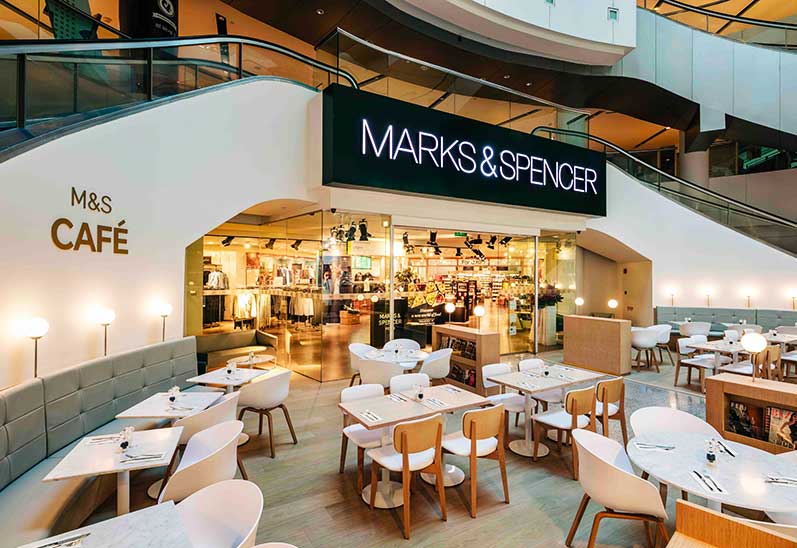
Innovative technology designed specifically for retailers to manage in store cafés The Customer Experience is on the rise Winning retailers are investing in the customer experience. Despite many claiming the demise of the high street due to online competition, shoppers are still demanding the experience and services offered by physical stores. Research from RetailEXPO claimed 73% of UK consumers would spend more time and money in stores that offer experiences, not just product. And with 60% stating that they would visit a retailer for their cafés, bars and restaurants, not to mention in-store events such as cookery tastings, wellness classes and music events, now is the time for retailers to embrace experiential shopping. ‘Retailtainment’ is here. To stay ahead, retailers must find new ways to engage customers – while still managing stock, operations and promotions more effectively and cost-efficiently. “An in store café can increase customer dwell time, improve loyalty and encourage repeat visits through a positive experience.” Eurostop Café Mode – streamlining the in store café customer experience Café Mode on Eurostop’s e-pos touch enables retailers to provide an additional dimension to their in store service, providing customers with the choice to enjoy food and drink in their in store café, using the same POS terminal to take payment for goods at the same time. Running themed promotions and offers across the store and café can entice customers to stay longer and enhance their shopping experience. An easy to use till system designed with the busy café in mind The in store café POS combines all of the features of Eurostop’s stock management system and POS system with those of a condensed hospitality module. It includes: Features Quick buttons and optional colour coding on the tillpoint enabling staff to navigate the system easily and take orders as quickly as possible, minimising queuing. Cashiers can switch between ‘Café mode’ and standard till mode at the touch of a button, allowing them to take payment for food and drinks, or goods at the same till point. A Kitchen Order Management system provides separate tickets for food and beverage items sold, and notes where they originate – from the fridge, kitchen or hot drinks machine and links all orders to the appropriate table number, for efficient table service. An End of Life management feature prints labels to override barcodes with any discounts later in the day, as bakery and other foods near their sell by date. Connected retail systems enable management reports and insights on desktop, tablet and mobile for retail and café sales to be tracked at any time of the day, from any location. Seamless customer service, accurate sales reporting and flexibility for promotions Eurostop’s in store café POS provides retailers with an up to the minute view of sales and stock across the business, whether retail stock or café food and beverages. With the latest information, promotions or discounts can also be applied, rewarding customers for loyalty and improving waste and costs management: Benefits Streamlines customer experience, allowing payment for goods and drinks at café tillpoint with connected in store systems. Improves café efficiency and reduces waste by enabling discounts on perishable food items to be increased throughout the day. Enables enhanced customer promotions – coupons can be printed at the till for use with the next customer visit or purchase. ‘One connected retail system’ provides management reports and overview of all retail sales across business, whether café sales or store merchandise. Real-time reports allow managers to make adjustments with discounts or stock replenishment throughout the day to maximise turnover. Quick and easy to use with minimal training, helps staff to take orders quickly, so avoiding queues and providing a better customer experience. For more information on opening an in store cafe, please contact us to speak to a retail expert and talk about our award winning cafe POS mode, or call Eurostop Sales on 0208 991 2700
Looking forward to a New Year on the retail high street in 2019
Richard Loh, CEO of Eurostop reviews 2018, and gives his thoughts on the retail high street in the year ahead. A look back at 2018 [th-slider design=”design-2″ dots=”false” arrows=”true” autoplay=”true” limit=”-1″ autoplay_interval=”5000″] It has definitely been a challenging period everywhere, including on the retail high street. Eurostop is approaching its 30th Anniversary and I am pleased to say that despite the challenges of 2017 and the following uncertainty with Brexit, we will be posting record profits for the retail year 2018. Last year was an interesting period for Eurostop, with growth across the board – from retail system and EPOS rollouts to releases of exciting new retail technology, and reaching new areas of the globe collecting tenant sales in some mega shopping malls. Many of our retailers have been with us for years and continue to grow as they expand into new markets, embracing changing consumer habits. There have been winners and losers, and the sad news of the difficulties of some notable retailers makes it an achievement to be standing strong on the British high street with our retail partners. The retail high street does indeed continue on, with astonishing advancements in technology. Working smarter, with smart technology means that you can ultimately make savings across your retail business. Having robust software to make sure that you have the right products and stock in the right place ensures that your customers can get what they want, in the most frictionless way possible for them. On the high street, new technology is being used everywhere from the stock room, to the shop floor. In store, online is not a competitor, but a way to enhance the experience and service in store, as we move closer towards that Customer Centric ethos. Of course providing true customer convenience means that hopefully your customers will be happy to share their data in return for this enhanced personalised service, and the GDPR won’t be a barrier to collecting their data. February will bring The Year of the Earth Pig in the Chinese lunar calendar and 2019 is said to be an auspicious year. I certainly wish you all happiness and prosperity and to establish some new relationships with many of you in 2019.
Harnessing your data to drive successful retail promotions
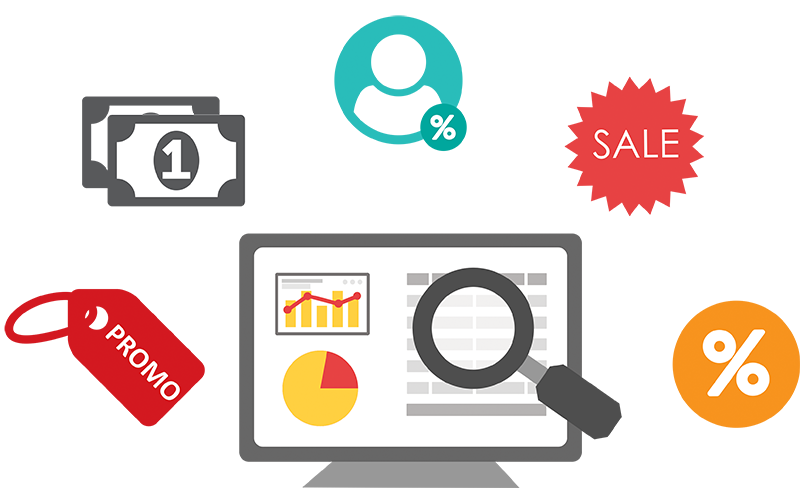
Being a successful retailer, like any business, is a balancing act. It’s art mixed with science. Putting together a curated range of desirable products that your customers just can’t resist, making sure that you have enough to meet demand, but not so much that you are left with excess stock. And all the while, you need to make sure that you are maintaining your margins and making a profit. You know how to put together a collection, but how do you get customers to buy more? How can you cross-sell and up-sell to increase sales figures during off peak times, and convince your customers they are getting a great deal? Retail promotions are the quick and obvious answer, but you need to manage them carefully to ensure that while they are a hit with your customers, they do not hit your balance sheet! By creating data-driven in store/online promotions and having a better understanding of your customer buying patterns, you will be able to promote the right products, at the right time and get customers to respond. But which products are best for discounting, by how much and for how long? Also, most importantly, how much will this cost your business? These are all questions that should be considered when you are planning a promotion. As you know, retail promotions can be very powerful. By studying each one you can learn from experience and identify trends in customer behaviour, all of which will help to make the next promotion even more successful. There are several main categories of retail promotion Discounting or Markdowns Often at the end of the season, this is where you discount a range of products, usually items that you need to shift to make room for new stock. This is a mass market sale that is available to all customers, and can be executed online as well as in-store. Loss Leaders This is where you lower the price of specific products that are in high demand, and sell them at a loss to attract customers into your store. Again, this could be seasonal, or in response to a specific trend. Once customers are in the shop or on your website, you hope that they are attracted to your other full priced merchandise and actually end up spending more. Loss leaders are a good way to shift items that are over stocked. Bundle pricing This is particularly popular in the fashion and clothing sector, and comes in many guises. This could be a Buy One, Get One Free deal, or a 3 for the price of 2 offer, or buy one get another half price. It makes customers feel that they’re getting more for their money. Special Event pricing Where certain items are discounted for a limited period only – often tying in with a special event, such as Valentines Day, Mothering Sunday, Easter, Back to School, Halloween, or even sporting events. Loyalty offerings This can be simply offering money off or a % discount on the next purchase, within a specified time period. Or it could be offering nominal points that can be saved up for a discount in the future. These pricing strategies can help to keep your customers coming back for more. Whichever type of retail promotion you decide upon, it is important that your retail systems can provide the data you need to discount profitably, and to then track the promotions, for later analysis. Maintaining Margin In order to get the most benefit from running a retail promotion campaign, your EPOS solution must be able to identify sales directly resulting from this campaign. Further analysis will show which promotions were most successful in terms of outright sales, and which were the most profitable. Did the promotion work in every store, or were some better than others? Did the promotion work for every product line, or were some colours/sizes/styles more popular? To ascertain this more detailed information, you will need reports, such as: Weighted Average Cost Sales per branch Sales per product line Full priced sales versus reduced price sales Margin Analysis Buy now while stocks last! Another important factor is setting a timescale for each campaign. Not only will this encourage your customers to act faster, but it helps you give your retail promotions a seasonal flavour – making them more attractive and on-trend. The right in store technology Having an EPOS system that can be pre-programmed with your promotions saves time at the checkout. Your sales staff do not need to think about what discount to apply (and when a certain promotion ends), the system simply applies the correct discount, whether it be a promotion with a voucher or code, a straight % reduction, 3 for the price of 2, or a promotional bundle (for example, a free tie with certain shirts). As well as saving time, this also avoids mistakes (and possible fraud) and enables your staff to concentrate on providing the best possible experience to your customers. In summary Retail promotions help to drive footfall and increase sales. If you do it well, based on analysis of your product and sales data, it maintains margin and generates profits too. For more details on how Eurostop can help, speak to a retail expert
Powering your Stores with the Right Retail Technology to Meet Your Customers’ Needs
Top Five things to look for in a new EPOS & Retail Management solution Many retailers are finding it a challenge to match their instore experience to the virtual world that is internet shopping. There is a lot for bricks and mortar stores on the High Street or in the Mall to compete with. At the same time, nothing beats being able to see and touch an item of clothing or shoes for real. Although fulfilment options are becoming more advanced every day, with some retailers even offering 1 hour delivery, nothing can beat the immediate gratification of walking out of the store with your new goods in hand. And with the wealth of new technology available, it has never been easier for retailers to make the most of digital innovation in store. By using the right retail technology to provide shoppers with the information and service that they need, retailers that get it right should see their sales soar. Here are our top five things to look for when you are considering new retail technology for your stores and business. Sector specific – Fashion, footwear and lifestyle are sectors where one size certainly does not fit all. The ability to setup and report by product and associated colours and sizes is crucial for managing stock. Holding detailed information about how each range (as opposed to an individual colour or size) is performing means that you have the right information to merchandise accordingly, and give your customers what they want. Connected view of Stock – Providing central visibility of all stock, regardless of channel (i.e. store, concession, online, warehouse, etc.) enables you to manage stock accurately, ensuring that you always have the right stock in the right place at the right time. In order to meet the needs of demanding consumers, retailers need pinpoint accurate stock information. So even if the size or colour isn’t on the rails, the retailer is able to locate the stock, not losing a potential sale. In store consumer apps or digital kiosks may be used to provide this information on demand. Alternatively, staff should definitely be able to check stock across the estate either from an EPOS terminal or mobile device. Detailed drill down reporting – Powerful reporting that generates high level company-wide information helps you to make fast business decisions, based on accurate up to date information. But Managers need to be able to drill down into the detail by department, location, time/week/month/year, product line, etc. to see the granular detail. As well as enabling mangers to take decisions about moving stock, even while out on the go, merchandisers and buyers can see at a glance what lines are doing well, perhaps due to the weather or events, and respond to meet demand accordingly. Scalability and international capabilities – if you are looking to expand your operations you need a system that will grow with you. The right features are also important if you are looking at overseas markets. You will need a solution that can handle differing tax rates and rules, possibly fiscalisation and for the best customer experience, translation. You may also need to handle different prices for different channels. Even if you remain in the UK only, but are looking to attract international clientele, you will need to be able to offer tax free shopping, where the VAT is refunded automatically to their account once they return home. Simple to use – An engaged workforce makes a huge difference to the atmosphere in store. Using systems that are straightforward and intuitive saves time, and minimizes staff training requirements. Empowering staff and consumers with quality information and content can only serve to make the path to purchase smoother. Some great reasons to take another look at your in-store retail technology.
Digital Payments and the Retailer
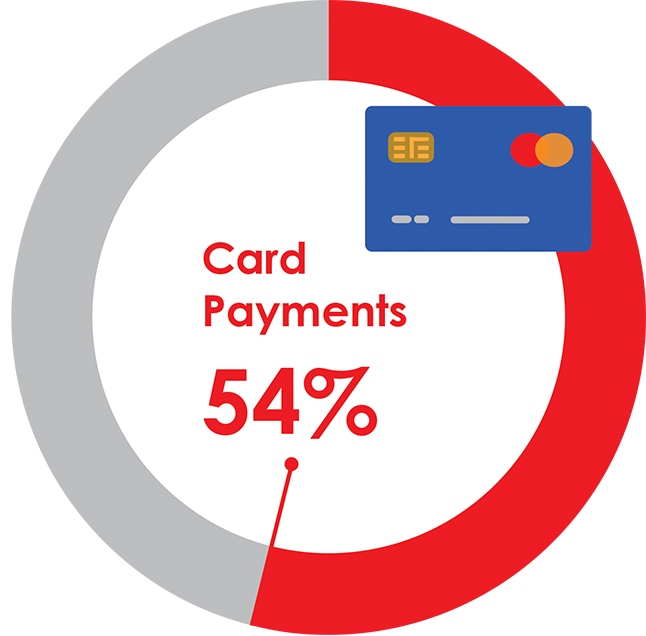
The pros and cons of using digital payments-only. Some retail outlets are experimenting with moving to digital payment-only operations. As non-cash payments become the norm, some retailers, particularly in hospitality, no longer accept cash. While there are downsides to managing cash, what are the pitfalls of refusing to deal with it? Mark McMurtrie, Independent Payments Specialist, and I outline the benefits and the disadvantages. Cards have long dominated retail spending by value but according to the British Retail Consortium (BRC), they now also account for over half of all retail transactions too. Figures published by the BRC state that debit cards account for 42.6% of all transactions, whereas cash is 42.3%. According to UK Finance 77% of all UK retail spending was made by cards. This trend has been driven by the widespread adoption of contactless and other forms of digital payments, which have finally won over the British public. Both the London Business School and the Bank of England have suggested that contactless cards are fueling spending. It is less psychologically painful to pay for an item with a contactless card than it is to part with cash. Card payments now account for over half of all retail transactions Digital payments are evolving fast Ten years ago the payments industry was dominated by about 10 companies (banks, Visa, Mastercard etc.), now the payments landscape has changed vastly and we are looking at more like 500 companies providing payment services to merchants. While some of the payment services now on offer are highly specialised, overall the choice for the consumer has increased tremendously, and raised expectations through the roof. Consumers now expect fast and secure payments, no risk, and, no charges. This is driving down costs, increasing competition and squeezing margins for the acquirers (typically banks), most of which is good for retailers. This new payments landscape has been driven by e- and m-commerce, of which most retailers have been a part. PayPal and digital wallets are the most obvious developments here, and it has spawned a whole range of copycat services, and generally opened people’s eyes to alternative payment methods. Everything is going mobile Mobile comes in many different forms, it can be people shopping from their mobile devices, checking and comparing product details while out and about, it can be paying from a digital wallet (for example, settling the bill in a restaurant), in-app or social media payments, or can be mobile POS, taking the till in the form of a tablet or smartphone to the customer for customer assisted selling. If consumers pay using their mobile (ApplePay, GooglePay, SamsungPay etc), the limit is much higher than £30, although few realise this. As the innovation continues, contactless payments are now evolving thanks to NFC enabled smartphones and the digitizing of cards. Physical contactless cards are no longer needed. This is significant for a few reasons for retailers. If consumers pay using their mobile (ApplePay, AndroidPay, SamsungPay etc), the limit is much higher than £30, although few realise this. The customer has the mobile phone which provides additional authentication via fingerprint or other verification/ biometric method, so the risk to the card issuer is much lower. As this becomes more commonly known, so transactions values and volumes are likely to increase even further. Another important benefit of mobile digital payments is the ability to collect customer data, for marketing use, and to send online receipts. This enables retailers to build a relationship with the customer after they have left the store or made their online purchase. Digital payments needs to sit alongside loyalty and reward programmes in order to drive customer acquisition and retention. Prepaid and gift cards are also an alternative to cash that continue to gain in popularity. These are used online as well as in-store and are available in digital format as well as plastic cards. There will always be some element of cash While the complete demise of cash has been predicted in some quarters for years, there are several reasons why we should hope that it doesn’t happen. Not everyone has access to a credit or debit card, or the internet, so a card only policy means that these potential customers are excluded. Some people will always want to pay with cash. Consumers come in lots of different groupings, with age being an important factor in their choice of how to pay. There is also another reason that we should keep cash alive. If there were no hard cash alternative for payments, it would be very easy for fees to be increased because there would be no competition. A few years ago there was a public outcry when the banks announced that they were going to phase out cheques. While cheques are hardly ever seen in stores, they do provide a useful method of payment in some instances, for example, for charities, for the elderly or when sending payment by post. Now it is all about providing choice to the consumer, so cash is unlikely to be phased out any time soon. And as for cryptocurrencies like Bitcoin – another South Sea Bubble or Tulipmania! At the moment, this is a technology looking for a problem to solve, and so far, it hasn’t found one in the legitimate, non-money laundering world! Digital payments – The Pros & Cons The benefits of going cashless can be summarised as follows: Less chance of fraud and robbery, as no cash held on the premise No cash handling fees from the bank, and no trips to the bank to pay it in Quicker transactions, better for the retailer and the customer, shorter queues Better marketing opportunities by collecting customer data for future use The average spend tends to increase when cards or contactless are used Required for e- and m-commerce The drawbacks of banning cash: Excluding potential customers that would like to pay with cash If cash is withdrawn altogether, processing fees are likely to increase Less privacy for the consumer In summary, there are many more
Customer centric stock and delighting your customers
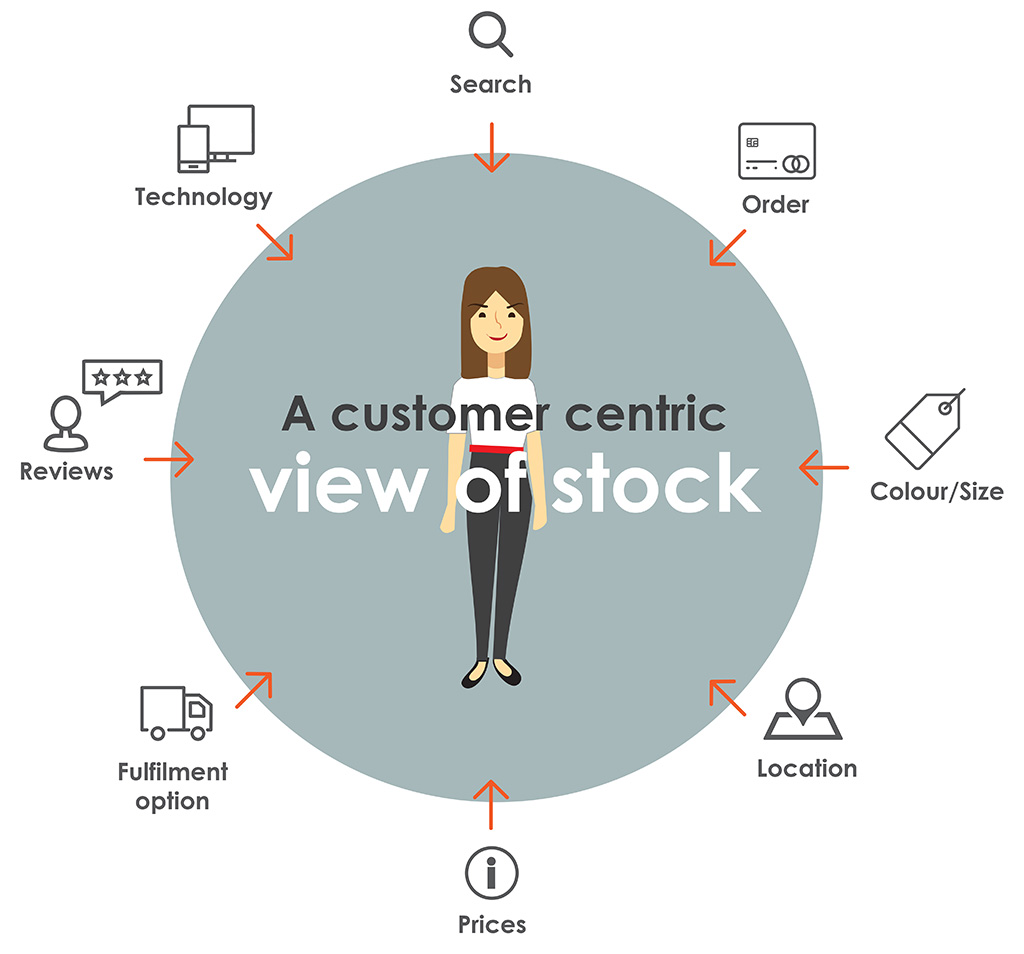
Retailers face a variety of challenges – not least successfully streamlining the customer journey across the many sales channels available and maintaining customer centric stock. Richard Loh, CEO of Eurostop, discusses how technology can help retailers to facilitate this journey and delight the customer, however they choose to buy. Today’s retail market is a complex one, selling through multiple channels to customers who have more choices than ever, and arguably, no longer show strong brand loyalty. Price sensitive, they can shop online for the cheapest deal and have it delivered within hours of ordering. It is undeniably a customer centric world. For the fashion retail market there are even greater challenges, for behind the customer expectation of immediate availability, there lies the very real possibility of disappointment in not having their choice available in stock. The fashion and footwear business is a tricky beast to manage, with size, colour, material and fit, adding to the complexity. For the retailer, delighting the customer means that stock must right across all of these elements to achieve the sale. It means ensuring customer centric stock and that the right stock is available at any outlet where the customer chooses to buy – whether at a retailer’s franchise, pop-up, concession, own store or online. The successful retailer will be the one that can consistently meet customer demand, quickly and efficiently – no mean feat. Smoothing the customer journey A customer may visit a store only to be disappointed by finding their size is not in stock. The winning retailer in this scenario will be the one that can check quickly on its systems if and where it has the correct stock to fulfil the order. Of course, many retailers may invest in safety or buffer stock, particularly on best sellers, in an effort to avoid this customer disappointment. But this buffer stock comes at a price – not only does it take up valuable storage space, it relies on many different factors to ensure it is profitable. The commercial threshold for keeping such stock often depends on timing – matching seasonal trends and confidence in the sales to ensure that new lines sell at optimum price, that there is no overstocking or need to discount at a possible loss. Unsold safety stock that ends up being sent to an outlet to be discounted may prove to be a costly way to guarantee customer satisfaction. Optimising stock across channels Avoiding this situation relies upon having an accurate, single view of customer centric stock across the business. From the distribution centre, across all stores (including concessions and franchises), an accurate view of stock styles, sizes and colours, enables a retailer to deliver true customer satisfaction. Many retailers claim that demand is mostly created in store with online used more for research, which means that failure to fulfil in store requests is missing a huge sales opportunity. Consider again the example of a customer entering a store to try on a particular item and then wanting to try a smaller size or different colour. The retailer with a connected, single view of customer centric stock can quickly check stock levels across the business. They may then offer the customer a home delivery, which may be fulfilled from another store or the warehouse. The only difference may be the way that the item is packaged. Although for some business models it can be more profitable to fulfil from a distribution centre rather than a store, it may be that ‘delighting the customer’ comes at a higher, but necessary cost to secure the sale. Plus any increased sell-through can ensure that seasonal stock does not linger, freeing up space for new lines. It is, as they say, a ‘trade-off’ and one that a real-time view of stock can help to balance. This connected view of stock also benefits staff. Providing them with the tools to do their job – a tablet or smartphone that enables them to check stock instantly on the shop floor without leaving the customer – dramatically increases the chance of a sale. They need no longer check stock in the back room, leaving the customer unattended. Customer centric model, not stock centric The tech-savvy retailer will already have invested in connected systems to provide a real-time single view of stock across the business. But it is important to ensure that this business model uses customer centric stock, and is not simply stock centric. Intelligently using stock data to meet customer expectations What this means is intelligently using stock data to meet customer expectations. Checking popular sizes and colours that are selling fast, at which location, and auto-replenishing will help to avoid the need to arrange special customer fulfilment requests. A real time view provides up to the minute sales information that can be acted upon quickly. Tracking customer purchases and preferences is, of course, also a natural next step in ensuring customer loyalty and patronage. As important is tracking returns of items and the reasons. Analysis may show that certain pieces or lines have a poor fit, or the material quality is not as expected, all important feedback for the buyers and merchandisers. Retail technology that makes a difference Technology today offers many different options to manage stock. RFID has come a long way since the early days when it was introduced. It takes all the hard work out of inventory management and can track exactly what stock is in the store, dramatically reducing dependency on safety stock. This accuracy helps to ensure that stock is in the right place to deliver real customer satisfaction. Other new technologies are emerging, such as video analytics, where observing how customers interact with products can help to identify how and why items are selling. For example, merchandisers may have put a new clothing line in a key position in store which attracts customers on entry. If customers pick up the item, then the price is right, if they then take it to the fitting room, then the