
From county shows to music festivals: how to ensure retail success at events

Trading at events can be lucrative; overheads are generally lower than a fixed retail unit, plus the sheer variety and number of events ensures there are opportunities for many types of business to sell its products. Events offer huge opportunities for companies to market their wares to a captive audience and can be a great launch pad for smaller traders. However, whilst retailers can generate a good revenue stream from trading at consumer events, it is certainly not guaranteed and careful consideration needs to be taken before plunging head first into the festival calendar. Here are a few top tips to help maximise trading presence. Do your research From festivals, concerts, and county shows, there are many consumer events to choose from during the year. However it’s vital to research which events are right for the company; not just from a product line perspective but also in terms of unforeseen cost and commitment in attending. Additionally, it’s important to understand audience demographics and if this is a good match for their brand. Lastly, retailers should research the scale and reach of the event, how organisers generate attendance and the footfall from previous years. By doing the research, retailers can select the events best suited to their business. Calculate the costs Selling at festivals may not be as cheap as you first think, in addition to the cost of the pitch itself; there are also the associated costs of attending. Staff expenses, cost of setting up and branding the pitch and transporting the stock all need to be accounted for in profit calculations. An important factor to consider is how you will take payments for goods on the go. Generally consumers don’t like carrying large amounts of cash and are used to the convenience of paying by credit card. Retailers trading higher ticket items would be wise to invest in a mobile till solution with chip and PIN capabilities – or risk losing a sale. Choose your stock wisely Focusing on an event that attracts the right potential customer demographics is key to success. Understanding the audience and offering product that matches their wants and needs is imperative. Make sure that your product offering appeals to the audience because context is everything! Additionally, retailers need to consider the feasibility of transporting, storing and replenishing stock for the duration of the event. It’s at these decision junctions when past stock reports become valuable indicators of future needs, enabling retailers to make informed decisions on the right stock for the right environment. Fulfilment options Although consumers like to see goods before they buy, it doesn’t always necessarily follow that they want to make a purchase and then take the goods away with them. Consumers purchasing a new pair of skis at a winter sports show are unlikely to want to carry them around for the rest of the day. In fact, if that were the only option, many would be passing on the purchase! It is vital that retailers consider the buying habits of their intended audience and offer fulfilment options appropriate for the goods being sold. Promoting your presence The right stock has been selected for the right audience at the right event, so far so good. The only thing left for the retailer to do is to announce their presence at the forthcoming event and create as much of a buzz as possible. There are a few ways to get your message out and retailers should explore the most appropriate way for them. Ideas could include sending newsletters to your existing customer base; marketing through the event organisers to the subscription base; advertising presence at future events via social media and by interacting on Twitter and Facebook. Post event evaluation Understanding how product lines performed at the various events is essential in building plans for future years. Retailers need to analyse the success of product lines, price points and promotions. Did this resonate with the audience and are there lessons that can be learnt for future events? This can be an arduous process but it is vital to learn from past experiences. For companies that have invested in retail management systems that enable payment transactions on the move, this process is far simpler. By having a till system working on a laptop or tablet with mobile chip and PIN services that integrate with the back office retail solution, retailers can accurately track sales and stock. More importantly, a retail management solution with mobile capability provides retailers with the ultimate flexibility to scale their operations and respond to trends in retailing.
Harness a Summer of Sport with promotions that boost your bottomline

For sporting fans, the summer of 2016 is set to be a glorious time. From annual events such as Wimbledon, the rugby union summer series, Tour de France and cricket one-day events through to the Olympics and UEFA Euro championships, a horizon of sporting promise awaits. Marcus Ardeman of Eurostop explains how to make the most of these opportunities. Major sporting events make an impact on the lives and pulse rates of sporting fans, so how can retailers capitalise on the feel good factor? There are plenty of ways to get involved with events without the eye watering cost of directly sponsoring the event itself. To maximise opportunity and increase sales retailers should consider a program of promotions that amplify the excitement and passion that major events stir in almost all of us. The power of promotions The purpose of promotions is to increase sales, attract new customers, and retain current customers. While most business owners would love to sell products at full price all of the time, sales promotions have proven effective at increasing the overall bottom line. Promotions differ from discounts in that they are less of a blunt tool and are psychologically more attractive to consumers. A discount of 10% off an item for a set period of time is only really appealing to a consumer if they were about to buy the item anyway. It brings forward in time the purchase date but it doesn’t ensure that the consumer spends the money saved within the store. If I am about to purchase a jacket for £100 and on the day I save 10%, I may decide to use the £10 saved on buying lunch in the café down the road. No additional value to the store and furthermore, we know people love to tell a friend about a good deal but at 10% it doesn’t feel like much of a bargain to talk about! We all love getting a great deal so what are the more popular options that retailers could consider when planning their promotions and how can they tie them in with a sporting theme? Planning (buying stock specifically for promotions) Many retailers look at promotions just as a way of selling slow moving stock, however often a well-planned promotion can also assist in bringing in revenue at quieter times. When planning/buying, a retailer can look at products which might be outside of their normal product set, but will be purchased to be used as part of a promotion to increase revenue at these times. Markdowns This is when retailers reduce prices on a wide range of products in their store for all customers. By having a theme running across the range retailers can align the products with a sporting event for example a summer picnic theme during Wimbledon with a promotional offer on 5 items (e.g. racket, balls, sweat bands, t shirt, shorts) for a fixed price. Through having good data on what is selling well, retailers can target the less successful product lines and bundle into the promotion. If customers feel they are getting a great deal they may take a punt on something new that soon becomes a firm favourite. Loss Leaders When retailers know that certain products are in demand, regardless of whether it’s a luxury item or everyday need, they can provide certain products at a discount to draw new customers to their store. Known as loss leaders, these products are great for selling overstocked items, increasing traffic to the store, and generating brand awareness. However, sales data is key when planning a loss leader promotion so as not to harm your margins. This is where coupling a loss leader promotion with a till coupon offer for a next visit can work well. For example a coupon can be produced that will only be activated at the end of the UEFA European championships, for a limited time. Bundle Pricing Bundling products is a brilliant way to generate a higher perceived value for a lower cost that customers have a hard time staying away from (I speak from experience!). Whether it’s a “buy one, get one free” deal or a “3 for the price of 2” special or “4 items of clothing for £50”, this tactic is great for making customers feel that they’re getting more for what they’re paying. As a bonus, this is a huge draw to then entice those customers to buy higher priced items once they’re in store. Clothing retailers could use bundle pricing to great effect showcasing suggested outfits for sporting events such as Ascot racing, Henley regatta, Wimbledon etc. Again, this is where sales data is absolutely vital in helping retailers to select the product lines that are popular sellers and aligning with less popular items to bump sales. Data is key Whilst promotions encourage people to spend whilst in store, they don’t necessarily encourage repeat visits. This is where it is essential for retailers to understand their target customers buying habits if they want to increase profits. Data is absolutely vital and this is where a good electronic point of sale system (EPoS) can help retailers take their promotions to the next level. By delivering comprehensive sales reporting, retailers can decide which products to target and for how long. Additionally, with access to real-time sales data, retailers will be able to monitor the performance of the promotion and more importantly make any modifications in light of changes in business requirement. Additionally, a good EPoS solution can enable retailers to be creative with their promotions, supporting a wide range of options, and build customer loyalty by producing promotional coupons printed at the till for use with the next visit or purchase. Measuring success Just like in sport, post match analysis is key to understanding success. Promotions fundamentally work by earning revenue in exchange for a smaller investment so it is important to calculate the return on your investment. Again, this is where a good EPoS solution with comprehensive reporting becomes a valuable tool.
Eurostop in a connected world

Eurostop’s award winning connected retail suite could help you to provide an omni channel customer experience and optimise your business performance In a connected world, your customers expect a connected customer retail experience. The digital revolution means that shoppers don’t shop either online or instore, but zig zag across both channels researching and interacting with your brand on the path to purchase. As a retailer, you need a software solution that is going to enable you to manage these demanding customers; and the data that you collect, always with a connected customer experience in mind. Easy migration to Eurostop systems Although you may be concerned about moving to a new system, we are confident that Eurostop systems can make a difference to the performance of your business; and make the process as easy as possible – why work with a supplier who isn’t able to tailor your solution for you? Your brand has personality, and each of our retailers are individual, so we make sure that you have a real person to talk to, to ensure that your upgrade to Eurostop systems is painless and easy. From importing historical data to a dedicated project manager, training and ongoing support, we guide you through the process of getting you up to speed quickly so that you can enjoy features that will enable you to grow your customer base and sales. A connected retail suite for your omni channel customer Award winning technology by Eurostop provides you with a connected suite of solutions to manage your retail business, allowing you to focus on what’s important to you – engaging with your customers. Our solutions are built on the latest technology, and are connected across channels to provide real time visibility to see where your stock is located and where your most popular items are selling – be this in your bricks and mortar stores or online. This omni channel view of your stock inventory enables you to make smart decisions about how to strategise your buying and store management, enabling you to react in real-time. Data and smart insights Eurostop realises how important data is. Not just collecting it, but to have access to the relevant reports and tools to examine the information and make better decisions. Our Head Office system boasts an impressive set of out of the box reporting across all channels, covering historical and live stocks and sales. Or delve further using one of our business intelligence solutions. Scalable and flexible Eurostop’s complete solution is scalable. This enables us to forge the type of business relationships that we treasure the most. Our customer base spans retailers with 1 to over 12,000 stores across the fashion, footwear and lifestyle sectors. We have many long term customer partnerships and are proud to have supported our customers’ growth through the decades with our systems. International expansion With the seemingly unlimited scope of digital, you may be looking to expand internationally. Our multilingual touch screen tills and fiscal printing are just some of the functionality that will facilitate this process. Understanding of the different retail environments and cultures is essential in this process, and Eurostop are happy to share with you our experience. Want to find out more?
Queue busting technology is not just for Christmas
Mobile POS solutions do much more than just help retailers beat the queues and process more transactions – they improve the customer experience from start to finish. Marcus Ardeman, Sales Executive at Eurostop explains. At busy shopping times like Christmas, Black Friday, Easter, and sale times, many retailers consider what options they can employ to shorten queue times and process as many transactions as possible. Whether this means adding extra staff or opening rarely used till points, they know that reducing queue times and getting more transactions handled faster increases the number of customers served – and importantly the bottom line. Talking to our customers we recognised this need and we now provide more flexible, mobile payment solutions that work on tablet devices, enabling retailers to handle increased demand for transactions away from the fixed till point, to beat the queues. More than just queue-busting However, that is not the full story! The new interactive POS tablet technology offers so much more than just queue busting, it enables a retailer to support a better customer experience. With so much competition today for retailers the customer experience is key (including those that provide luxury and bespoke items). A more flexible payment solution that works in their store setting can give a retailer the edge on customer service – and one which we are able to offer thanks to the latest mobile and tablet technology. For these retailers, whether they have four stores or twenty four, the technology can be used by an assistant, who can act as a personal shopper with a customer. Such retailers have realised the benefits of having staff more mobile when serving – using mobile tablets, they can talk with customers, check stock and with bar code scanners and chip and PIN technology, they can also scan products and process transactions from the shop floor. As well as providing a great service, this approach also helps to ensure that queues don’t form in the first place. In some independent stores, the tablets can even be used to design and create a bespoke piece while with the customer, which can then be ordered and the transaction handled – all from the same device. To complete the seamless shopping experience the e-receipt functionality enables receipts to be sent directly to the customer’s phone or email. If a printed receipt is required, the use of wi-fi and remote printers ensure that the customer does not need to stand and wait at a till point. Receipts can also be configured to match a store’s style – for example, printed to a different size, (A5 or A4) and include the retailer’s branding. Improving the customer experience The ability to check stock from anywhere on the shop floor improves the whole customer experience, enabling staff to be more responsive. Not only can a member of staff use a tablet for a check of stock items in the warehouse, they can also conduct a search on the website. For many retailers with multiple locations that often do not hold all stock in every store – being able to quickly access stock levels at other stores enables sales personnel to handle customer queries efficiently. In busy times being able to apply such technology could be invaluable. An example might be shoe retailers who have many key peak times, including back to school at the end of the summer. When handling shoe sales, tablets can be used to measure customers’ shoe sizes, check stock against the size required and then process the transaction, all from the shop floor. This prevents queues at the till point as customers line up after the fittings – reducing stress levels for both staff and parents! A change of mindset This personalised service approach does require a change of mindset. It is about managing the whole customer experience from the start right through to transaction. Today the omni-channel retailer is not just focused on processing sales faster and getting more customers through the door. The new tablet technology offers retailers more flexibility to support their business and respond to customers. Rather than simply thinking of a mobile point of sale as queue busting, retailers should think about all the added benefits to their business, and for their customers.
Eurostop Offers Top Tips to Retailers for Black Friday 2015 Success

Eurostop publishes paper providing guidance to retailers, based on conversations with its customers Eurostop identified that their retail customers that took part in Black Friday 2014 reported healthy growth figures from participating in the one-day event. This correlates with the official figures, which revealed British consumers spent £810 million pounds during Black Friday, making it the biggest shopping day of the year in 2014. However, retailers need to beware. Increasing turnover at the expense of profit margin is a difficult equation to balance. Planning is paramount and the route to retail success is to become more data aware. Decision-making based on hard data rather than guesswork enables retailers to make the smarter decisions towards higher profits, greater customer satisfaction and sustainable growth. Phillip Moylan, Sales Manager at Eurostop comments; “It is easy to understand why Black Friday has become so popular, consumers benefit from huge discounts on goods and retailers achieve a significant lift in sales and revenue. However, discounted goods and increased profit margins don’t generally go hand in hand. Retailers need a solid strategy to achieve the full benefit from Black Friday.” First arriving to UK shores in 2010, Black Friday is a day when retailers heavily discount goods. The concept grew in popularity and by 2014 most of the major UK retailers participated resulting in a one-day sales frenzy, with consumers spending at the rate of £9,375 per second. Retail analysts are predicting that Black Friday 2015, and its lesser known cousin Cyber Monday, could see sales figures surpass the £1 billon mark. “Retailers who want to improve turnover and profits, must communicate well internally and enable a marketing plan for this event. It is vital that retailers are able to assimilate their retail data into the decision making process. For retailers that don’t have a Stock Control and EPoS solution that can give them the information needed, it might be time to find a new technology partner before missing out on the next biggest shopping day of the year,” Moylan concluded.
Black Friday 2015: How to ensure your business benefits from the biggest shopping day of the year by Phillip Moylan at Eurostop

Official figures revealed that British consumers spent £810 million pounds in 2014 on one single day, making it the biggest shopping day of the year. That day was Black Friday; a US import that British consumers had barely heard of grew in the space of just 4 years into the biggest phenomenon that retailers experienced in decades. If that statement surprises you, you are not alone because whilst many retailers benefited from the surge in sales, with consumers spending at the rate of £9,375 per second, some retailers did not participate, maybe thinking this was a passing fad. However, that decision proved costly for the retailers who were left playing catch up for the remainder of the year, missing out on the much needed revenue bump and resulting in an overall weakening in annual sales revenue. Retail analysts are predicting that Black Friday 2015, and its lesser know cousin Cyber Monday, could see sales figures surpass the £1 billion mark. So far, so great, consumer’s benefit from huge discounts on goods and retailers achieve a significant lift in sales and revenue. However, discounted goods and increased profit margins don’t generally go hand in hand. Here are a few pointers for retailers to consider in their plans to achieve the full benefit from Black Friday. Making a mark If a retailer is planning on taking part in Black Friday they need to ensure consumers know about it! This means having a solid marketing strategy for Black Friday that targets existing customers and develops a new potential customer base by promoting your offers well in advance, both in store and online. Retailers need to think about in store banners highlighting the event, emailing their existing customer base with teaser information and maximising web traffic to their online site through search engine optimisation to drive click through traffic. However, marketing comes at a cost and retailers need to factor this in their overall strategy when participating in Black Friday. Sales strategy Retailers often plan a year in advance their campaign strategy for the important seasonal sales spikes during the calendar year, with Christmas obviously being a key period. With Black Friday occurring so close to the traditional pre Christmas shopping period, with this year falling on 27th November 2015, there are potential ramifications that need to be carefully thought through. It is important for retailers to consider where Black Friday fits in their sales and promotional strategy, it is effectively a one day sales event and there is no guarantee that consumer loyalty will be secured and continue throughout December. Retailers could adopt a strategy of giving promotional vouchers as part of the purchase made on Black Friday giving consumers a % discount on non sale items during December, thereby extending the loyalty period. Alternatively retailers could go with a loss leader, enticing consumers with a heavily discounted item, in the hope that they continue to spend on non-sale items recouping any lost margin. Increasing turnover at the expense of profit margin is a difficult equation to balance; retailers need to decide what they want to achieve from Black Friday, how sales and pricing will impact the business and what their strategy will be. What to sell, when to sell it Retailers generally purchase goods months in advance to ensure sufficient stock levels during peak sales periods. Unlike other seasonal peak periods that have a gradual ramp up before hitting a peak, Black Friday is just a day. Retailers need a strategy for effectively a 24 hour period, striking the right balance between the stock they buy for Black Friday and the margins they want to achieve for the day itself and the remainder of the pre Christmas shopping period. This can leave retailers in a quandary, do they discount a mature product line with the aim of shifting older stock or do they purchase a new product line specifically for Black Friday with the plan of driving footfall towards the non-discounted lines. Retailers may presume that they must dramatically discount significant lines of stock, however they should consider a more nuanced approach that is focused on limited lines available on Black Friday with targeted reductions. This ensures retailers can realise the benefits of increased footfall/traffic on Black Friday itself without damaging their margins and negatively impacting their Christmas results. Boomerang products Retailers are in the business of selling products; returns are inevitable however a poorly conceived returns policy can negatively impact profit. Retailers need to consider what their returns policy will be for Black Friday, to ensure any unwanted rather than faulty goods are returned in a timely manner so the item can be re-sold before the boxing day discount period. Some retailers have previously set a return policy of 2 weeks for unwanted discount purchases made on Black Friday. Retailers need to decide how they will manage returns and may choose to implement a limited time period for returning goods or only offer in store credit note on unwanted purchasers. This of course would not affect a consumer’s statutory rights with regards to faulty goods, as covered under the Sale of Goods Act. Delivering a positive online experience We all love getting a bargain but there is nothing more frustrating than wanting to buy and not being able to. A common complaint amongst online purchasers is the frustration of a website crashing just at the crucial purchase moment or during the browsing process. It is vital that retailers ensure they have sufficient resources in place to handle a surge in online orders and transactions by stress testing their e-tail operation. With Black Friday being a particularly popular event for online retailers there is no shortage of competitors waiting to serve your customer and delivering that positive online service we all want. When it comes to getting a good bargain loyalty can be fleeting, digitally savvy consumers can swiftly take their business elsewhere with just a few clicks of a mouse button. Be prepared and it could be your business benefiting
A ‘Mobile First’ approach to website design boosts customer loyalty and makes best use of budget, says Eurostop

With a ‘Mobile First’ approach, one size really does fit all Eurostop has published a paper stating that when budgets are tight, retailers should always take a ‘mobile first’ approach to website design. In an increasingly competitive marketplace, retailers need to ensure that they provide an interface that encourages customers to remain loyal, by providing a content rich website that is mobile friendly. Deborah Loh, Marketing Manager at Eurostop and author of the paper commented; “Industry pundits predict that by 2017 more than 90% of internet users will access online content through their phones. However, in some demographics we may already have reached that point of market saturation. If a retailer’s website doesn’t look good on mobile devices, they could be losing out already.’ The paper explains that when looking to make the most efficient use of available resources, taking a ‘mobile first’ approach will ensure that retailers focus on what is most important. A website that looks good and works well on a mobile device with limited screen size will scale up to a desktop, however, the reverse is not so true. Retailers with a good mobile site will not need to invest in developing an App, saving considerable support overhead as Apps need to be developed and tested for different operating systems. Finally, Deborah makes the point that ensuring that your site is mobile friendly is important so that you are not penalised in Google’s mobile SEO rankings. With the increasing number of mobile internet users, you want to make sure that you are returned ahead of the competition. There are so many benefits to taking the ‘Mobile First’ approach retailers should be asking themselves not; ‘Can I afford to develop a mobile website’ but ‘Can I afford not to?’
Keep your options open, Eurostop tells retailers as 75% select cloud-based solutions

Choosing a supplier that offers cloud and in-house IT, frees retailers to concentrate on their core business Eurostop has seen demand for cloud-based retail solutions increase significantly in 2015, with 75% of new customers selecting cloud. In a paper published today, Eurostop suggests that retailers should select a supplier that allows them to keep their hosting options open when considering retail management systems. Retailers should be able to focus on the systems functionality, and not be constrained by the available IT infrastructure, which may require changes with growth and over time. Eurostop’s article entitled; “Keep your options open, Cloud vs In-house. Which one is best?” discusses the benefits of cloud versus in-house systems. It claims that while the cloud provides flexible and scalable IT systems for growth, capital investment on in-house servers provide faster access, better control over data and can result in payback within 18 months. Marcus Ardeman, Sales Executive at Eurostop, said; “As a well-established supplier to the retail sector for over twenty five years, we have seen how customers require varied solutions to support their business at different times. Despite the current trend for cloud, which we are happy to supply, we recommend keeping your options open. “Ideally retail systems should be available either via the traditional local server method or as a full cloud solution. What is important is that retailers are able to remain flexible and adjust as the business requirements grow and change. At Eurostop we ensure that our clients have a choice between cloud and on-premise solutions, which they can change as their businesses evolve.” For retail companies considering subscribing to cloud systems, the main benefits are no reliance on fixed servers, real time access to data, scalability and simple software upgrades. However, some retailers may prefer a local server based infrastructure, due to unreliable ‘internet’ connectivity, for security issues or that is easier to utilise integration tools when all software is stored locally.
5 reasons to consider a mobile first e-commerce website
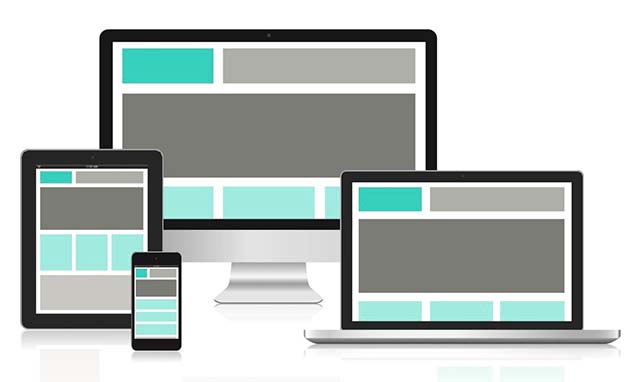
As a consumer, we are constantly enticed to purchase the next ‘must have’ item. We are presented with new and exciting ways to shop or are reminded to take advantage of that bargain promotion just received via email. In this digital age, the ways in which to browse and complete that purchase become more and more slick. A competive market offers us options and why wouldn’t we go for the retailer that offers a more sophisticated customer experience? After all, with the ever widening internet there is a whole range of possibilities. But what is going to convince your customers to be loyal to you? What is going to help entice new customers to see what you have to offer? With consumers expecting more sophisticated interfaces and retailers trying to develop more personalised experiences, if you are to remain a player in this competitive arena where customer loyalty is key, two important concepts are omnichannel and mobile. Eurostop takes a look at some of the key reasons why if you haven’t already done so, you need to look at your online mobile experience – in fact why you need to make it mobile first. 1. Omnichannel is the new buzzword. Mobile is an essential part of the omnichannel/cross channel/connected customer experience. Argos reported that in 2014, 44% of sales started online, although 90% of transactions involve a store. The lines between online and shopping in store are blurred. Consumers expect to be able to browse, research, purchase, return and choose delivery options wherever they are and on the device they have to hand – whatever is more convenient, they are in control. Mobile is even often part of the instore experience. As customers pick up an item in store, they are swiping their mobile device to check if they can get a better deal online or in another store. As a retailer, you need to ensure that you provide an interface that encourages them to remain loyal, or encourage them to look at other upsells. Do this by providing a content rich website that is mobile friendly. 2. Become mobile friendly or lose out. Statista, an online stat service predict that In 2017, figures suggest that more than 90 percent of internet users will access online content through their phones. The statistic speaks for itself. 3. Becoming mobile first forces you to focus on what’s important. The principle of mobile first means that you take a practical approach to design. With limitations on screen real esate, only elements vital for the user experience are included. Adding more only as screen space increases means screen bloat is reduced when optimisation is essential. 4. Browser or app? If budget is a consideration, then the most cost effective solution is a mobile first website. The solution is optimised for mobile, meaning that not only is it smart phone compatible, but it will adjust layout to scale up for tablets and desktops. One website to maintain. One site fits all devices and browsers. 5. Google’s mobile ranking. In April, the giant made changes to the way in which they rank results on mobile devices. Considering point number 2, you want to make sure that your website is returned nearer the top of the list in a search. If you want to check if your pages are mobile friendly, use Mobile Usability report in Google search console (Webmaster Tools) So the question ‘can I afford investing in mobile commerce?’ has really got to be ‘can I afford not to?’ Eurostop offers a connected ecommerce solution that maintains open communication with your other channels – both head office and the bricks and mortar stores. There are no clunky interfaces to maintain or dual management of your product, stock inventory and customer loyalty information. The responsive mobile first user interface ensures that it is mobile optimised and the easy to use content management system provides you the control in keeping your website up to date.
Black Friday 2015 – The countdown has begun

Sales on ‘Black Friday’ last year reached elevated levels, and with all the hype surrounding the day, retailers need to make sure that they are prepared to meet demand and customer expectations. Eurostop takes a look at some of the key facts and figures, and what retailers can do to prepare for the 27th November. UK facts ‘Black Friday’ 2014. Online sales increased by 91% per centOnline spending was 37.5 per cent higher than it was during Black Friday 2013, according to statistics from Barclaycard. . Online accounted for 21 per cent of total salesThe BRC said online sales of non-food products grew by 12 per cent in November compared to a year earlier. This led to the highest ever non-food online penetration rate on record, which stood at 21 per cent – or more than £1 in every £5 – in November. Consumers spent 18 per cent more this yearAccording to Barclaycard, consumers spent 18 per cent more than they did on the same day last year. Last year, it said, Black Friday spending was up 21 per cent, with online spending increasing by 41 per cent. Here is a simple checklist to help retailers prepare for the rush and to make sure that they take full advantage of the increased traffic. Ensure that you have accurate stock visibilityMany retailers were caught out by not having adequate stock in stores. Make sure that your merchandise solution is prepared and that you have managed stock to be ready for sale. Update your website to accommodate mobileAccording to IBM over 59.8% of last seasons’ traffic came from mobile devices. Prepare your credit card terminals for increased trafficIf your store is still on a dial-up, consider a move to DSL/Broadband. Prepare your website for increased trafficMany retailers traded from midnight to maximise shopping times and put deals online overnight. Websites including John Lewis, Argos and Tesco Direct struggled to handle the increased traffic. Train store personel in crowd managementDuring ‘Black Friday’ police were called to a number of disturbances at London and Manchester supermarkets as shoppers fought over goods.