
Is It Time to Update Your Retail POS System?

If you’re in retail, you undoubtedly have some form of retail POS system in place, with software running your various points-of-sales which are probably linked together in some way. However, there have been big advances in POS software in the past decade – Big advances in both cloud computing and “smart” processing systems that allow modern retail POS systems to go far beyond the terminals and database-style number-crunching typical in older POS software.
Why Retail ERP Software is a Must for Fashion & Footwear Retailers
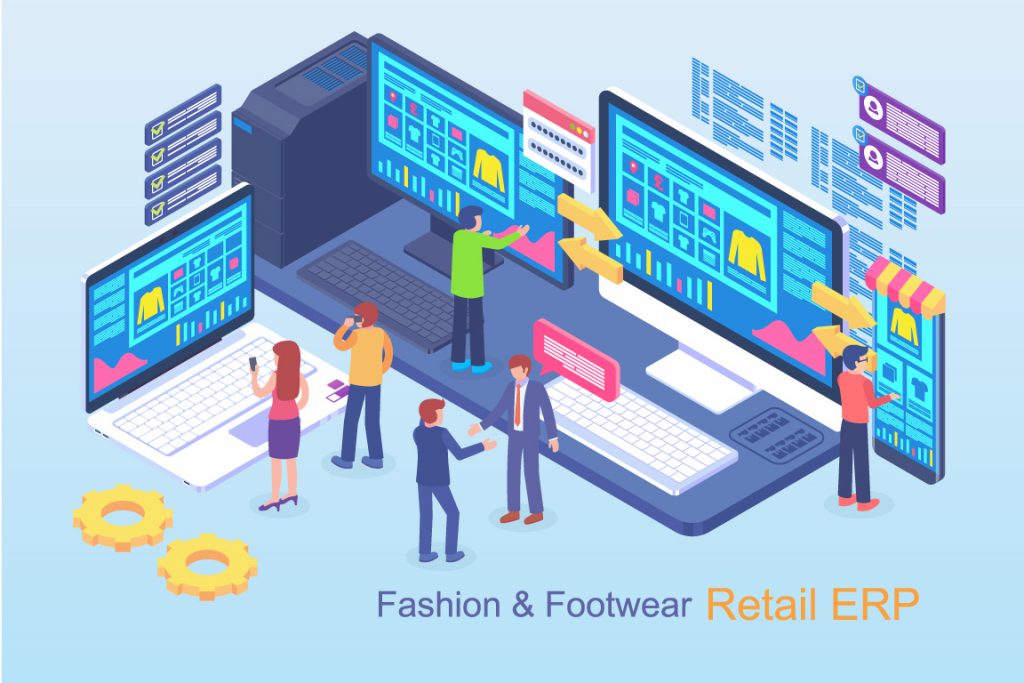
Why Retail ERP Software is a Must For Fashion & Footwear Retailers When managing a fashion or footwear retail operation – or any retail business – you have a lot of moving parts to keep track of. You need to stay on top of your products, stock, suppliers, allocations and replenishment, reward your loyal customers, measure the effectiveness of promotional campaigns, and always keep an eye on your bottom line the whole time. The amount of big data a modern retailer has to keep track of can be overwhelming. That’s why the tailored Enterprise Resource Planning (ERP) software systems from Eurostop can be so beneficial to fashion and footwear businesses. The right retail ERP software suite, customised to your needs, can streamline numerous aspects of your day-to-day retail operations, while also acting as a quality business intelligence tool for making smart, data driven decisions. What Is Retail ERP Software? Simply put, retail ERP software is a centralised piece of software which creates a single view of stock that contains everything you need to manage your retail operations and store portfolio. It connects various software tools while adding all data to a database or datawarehouse where data can then be mined, analysed and reported on. A typical retail ERP software package includes: Integrated (or connected) Point of Sale (POS) Inventory Management Supplier Management Order Management Merchandise Management Promotions Management Longer-term trends tracking and predictions CRM-style features for tracking individual customers or demographics Integration of multiple sales channels, promotions and reporting However, one benefit to tailored retail ERP software over a traditional ERP system is that the included modules can be customised, included or excluded based on the specific needs of your retail operation. Why Do Retailers Need ERP Software? The primary purpose of retail ERP software is to maintain accurate stock control while streamlining operations, which can also reduce costly mistakes such as stocking errors. For example, when a customer makes an in-store purchase, the point-of-sale system is synched to the ERP software with a fast and intuitive POS interface that makes it easy for the salesperson to process the sale with accurate stock, pricing, promotion and customer loyalty data. This makes a happy customer since the process happens so quickly and efficiently, minimising potential errors and time waiting at till point. During this process, sales staff may also capture customer loyalty information, including name, address, and (optionally) payment details. This data is stored and can prove invaluable for tracking customer purchase history and future marketing opportunities. As each POS in the estate is tied directly to the main stock control system, it automatically updates stock totals to reflect sales and refunds so that levels are transparent across your POS estate, channels and also at Head Office. This can prevent multiple channels competing for the same item of stock, allowing you to fulfil requests or orders accurately. Later on, if the customer visits your online store because they want to buy more of a particular item, such as socks, by logging into their account they can see their own purchase history. This allows them to quickly identify and re-order the socks they want or find other cross sell or up sell opportunities. The system may have even stored their payment details and preferences, to make checkout even faster. Then, when you’re trying to make purchasing decisions for the upcoming season, you can make effective use of this data – as well as information from all your other customers – to best understand what styles and colours sell, and in what locations. You could also pull up information on your bestselling channels, or even information on sales staff, to see who’s most effective at upsells, or fastest at processing orders. It’s easy to see how this level of automation and data collection can simplify your life and importantly enhance your retail business. How should Retail ERP Software Be Setup For Fashion and Footwear Retailers? That’s an overview of some of the potential customer touchpoints with your brand and how ERP software can assist the customer journey, however managing retail actually goes much deeper. So what sort of setup is particularly beneficial to retail operations? Master Data Management A retail ERP system should allow you to setup products by hierarchy or using attributes. This may include organising products by season or other merchandising groups, allowing retailers to manage and report on data correctly to effectively manage their operations. Size and colour variants are significant in the fashion and footwear industry. It’s important to be able to group SKUs (a particular colour and size variant) without having to setup hundreds of variations of the same product. Not only is the latter option disorganised, but it means that you can’t report easily for example on how well a particular colour line is selling without having to aggregate sales for different sizes. As an example, you may have a dress that comes in 3 different colours and five different sizes. This can be setup as 1 product, with 3 colour and 5 size variants, which is in effect 15 SKUs. The system will then be able to report on sales by individual colour (which would allow you to see which was the most popular colour) or by size. In addition, you would be also able to report on how well the dress sold as a whole that season. By having the right data available in an intelligent format, you can report and better understand your customers’ preferences at both a granular and summary level, to merchandise according to demand. Supplier Management Retailers may have a range of suppliers from which they order their product ranges. A holistic retail ERP system will also cater for supplier management. It could also include features to manage information such as supplier prices (cost, rrp, selling price) and packs. The system will process purchase orders for suppliers and allow you to book in and receive deliveries at stores or warehouses. Stock Management Stock movements and statuses can be complex; from booking in to receiving and statuses such as in transit, quality control, to
5 Reasons Every Retailer Needs Retail EPOS Software
What Benefits Does Retail EPOS Software Bring to Businesses? Modern retail is more complicated than ever before. Even small operations may find themselves juggling multiple outlets, balancing both offline and online sales while struggling to stay on top of their business. In response, retail EPOS (Electronic Point of Sale) software has become more robust, providing the best way for retailers to manage stock, keep track of customers, and make smart data-driven decisions about the future. There are many benefits to investing in retail EPOS software, and few reasons not to. Five Reasons Every Retailer Needs Retail EPOS Software 1 – Improved inventory management The right EPOS application can help you manage inventory across multiple outlets, as well as online shops. You can track all inventory at a glance, as well as instantly getting detailed reports on sales, stocks, and trends. This allows you to make much more precise orders and avoid under/over-stocking. 2 – Faster checkout processes Today’s customers are time-focused and don’t like having their time wasted. Whether it’s standing in line at a store or waiting for online sales to process, they want the process done as quickly as possible. EPOS software allows you to streamline this process, reducing customer inconvenience. In turn, this leads to improved customer satisfaction and more repeat business. 3 – Improve consistency across multiple outlets Maintaining the customer experience across every outlet can be difficult without a centralised software solution tying it all together. EPOS software allows you to maintain prices and stock across every outlet and avoid situations where the experience could be degraded in different areas of your business. 4 – Better employee management Retail EPOS software gives you significant insights into the behaviours of your staff. Employee logins are tracked, and their performance can be analysed with the same level of detail as your stocking and ordering. You can quickly see who is most efficient at working the system, or who makes the most upsells, and adjust rewards or training as appropriate. 5 – Access your information from anywhere EPOS systems are cloud-connected, and accessible from anywhere in the world. Even when you’re on business trips, you never have to be disconnected from your business. You can oversee it from anywhere, seamlessly. Eurostop is one of the top providers of EPOS and ERP systems, with software in more than 12,000 retail outlets around the world. If you’re ready for a better way to manage your retail operation, contact us to learn more.
What is Mobile Point of Sale? Your Guide to MPOS Systems
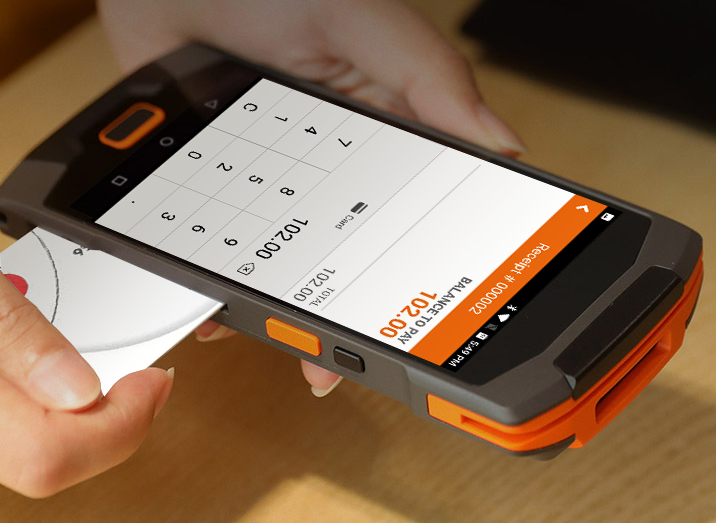
These days, you’d be hard-pressed to find a simple cash register being used to ring up sales at any retail establishment. Technology is advancing at an impressive rate, and the impact is not lost in the retail arena. In a connected world, where omnichannel is key, digitally connected systems are in fact indispensable. These software systems can provide retailers with a host of different features and benefits to assist and empower them do everything from process sales (POS, MPOS) to enhancing customer relationships (ERP software). However, it’s important to understand why mobile point of sale systems are so important for the retail sector, as well as some of the advantages they can provide. That’s why the team from Eurostop has gathered an in-depth guide for you here about the uses and benefits of MPOS software. What Exactly is a Mobile Point of Sale System? Before diving into the benefits and other details of mobile point of sale systems, it’s important to have a clear understanding of precisely what they are and how they work. Unlike traditional POS systems that store customer data and take transactions at a fixed till point, MPOS systems are completely mobile. This enables retailers the freedom to get out from behind the cash desk and help customers from anywhere on the shop floor, or even outside a brick and mortar store, while still having all the features of a traditional POS system at their fingertips. Mobile POS systems often consist of mobile devices such as tablets, handheld units or smartphones that take the place of traditional cash registers or point of sale systems. They can also come equipped with add-ons, such as card readers, chip scanners, receipt printers, and other components. In terms of software, the MPOS system links all of these components together, using innovative cloud technology that helps you to track sales better, help customers, and provide any other necessary information to complete sales from any location, as long as there’s a wireless connection. Top 5 Factors to Review When Choosing a Mobile POS System If you’re considering investing in a mobile POS system, there are some important things to make note of, such as: Support for Mobile Payments: These days, many transactions are processed utlising customer smartphones with mobile wallets – the uptake of which has been accelerated by the COVID-19 pandemic, which saw shoppers and retailers curtailing the use of cash. So it’s important to make certain that any mobile POS solutions you implement are compatible and designed for a range of payment methods including mobile payments. This way, your customers can select to use options such as Google Wallet, Apple Pay, and other options, whatever is most convenient for them, which will enhance your brand experience. Most important, you don’t risk losing a potential sale. Support for EMV Chip Credit Cards: Credit cards are created with EMV chips, making swiping unnecessary. Contactless payments are also possible if the sales value is under the contactless limit, or the credit card is simply inserted into a card reader located under the MPOS device’s pin pad, making the process extremely simple. We recommend selecting a vendor that supports an all in one device which will processes integrated payments. This means that your store associates won’t have to carry a separate PDQ (credit and debit card) machine and neither will they rely on a reliable wireless connection, all of which makes the solution truly mobile. Support for Multiple Registers: For large retailers, you’ll need to ensure your mobile POS system can handle multiple registers and transactions simultaneously. Not only will this make the transaction process more efficient, but also offer your shoppers a choice of options and enable you to grow your business without the need to invest in new point of sale software/hardware as you scale up. Reliable Barcode Scanning: Every interaction at payment has the potential to impact the experience that your customer has with the brand. So a seamless checkout experience with accurate and robust barcode scanning is essential. Make sure that your solution uses technology that can scan barcodes reliably every time. Some solutions use phone cameras, or a separate scanning device, but these can be unreliable and increase the footprint of your mobile solution. Even better is an integrated scanner, which will enable you to add items to the sale quickly from the same device, with accurate pricing and promotion information. Top Benefits of Implementing a Mobile POS System There are many benefits to implementing a mobile POS system in your retail establishment. Some of them include: Increased Security: Mobile retail systems help provide your customers with increased security. This is because they all need to comply with PCI guidelines or EMV technology, which offers safer transactions than other alternatives. Reduced Wait Times: With MPOS solutions, you’ll no longer have to risk losing business and a potential sale due to the sight of long queues and increased wait times. As well as assistants behind the cash desk, you will have the flexibility to deploy additional mobile staff on demand to process transactions and assist with customer queries directly on the shop floor. This is especially useful for busy promotional periods or during peak hours. Added Floor Space: One of the biggest advantages of MPOS systems is that they don’t take up any floor space like traditional POS systems. This means more room on the floor to highlight your products. In addition, where social distancing has become mandatory during the COVID pandemic, mobile POS units can give you the added flexibility to make smart use of your space. Customer Data Collection: MPOS systems help you collect important data about your customers from purchase history and preferences to personal information like emails and phone numbers. This makes it easier to implement loyalty programmes and assists you in providing a personalised service when they walk through the door. Easy Reporting: Being able to analyse performance and react to changing footfall, environmental factors and promotional campaigns is paramount to a growing retail business.
Why Your Business Needs to Invest in A Modern Retail EPOS Software System

For years, Electronic Point of Sale (EPOS) software has been growing in use, and it’s easy to see why. EPOS systems help tie together every aspect of your retail operations and can even be linked to other business systems, such as your inventory, ERP, accounting or CRM systems, to yield further benefits. Today’s EPOS software solutions can do so much more than simply provide a platform for taking sales. If you’re still using older software and entry systems that are little more than glorified cash registers, your operation could see so many benefits from upgrading. In this article, we’ll talk a bit about how retail EPOS software can radically change how you conduct sales and track your inventory – changing the in store experience all for the better. Seven Reasons It’s Time to Upgrade Your EPOS Software Accept a wider range of payments Any till or EPOS system can accept payments – but in a global sales environment, you need options for taking payments in as many forms as possible. Along with standard forms of payment like cash and credit card, modern EPOS systems can take several other forms of payments such as mobile wallet payments, multi-tender payments, deposits and more. The easier it is for your customers to pay, the more they’ll come to prefer you over the competition. This can be particularly vital if you’re expanding operations into countries where you have a minimal physical presence and need ways of handling local payment methods. An all-around better customer experience Retail EPOS software makes life easier for your customers in multiple ways. Beyond accepting more types of payments, your sales staff will easily be able to access product and other inventory data from across your store estate – allowing them to respond to enquiries, giving out accurate information to allow customers to purchase what they want in the most convenient way possible. Never miss a potential sale! Providing a personalised service also becomes possible with inbuilt loyalty systems; and that’s vital as customisation becomes a key differentiator on a competitive high street. Your systems build up knowledge of what your customer preferences are, so why not upsell by recommending other products they may like, or reward loyal customers with targeted promotions? Even when handling standard in-person sales, a good EPOS will speed up processing at till point, reducing queues and also errors. Products can be scanned with prices, markdowns and promotions all applied correctly and securely. This not only adds up to an improved customer experience – and your customers will appreciate it, but it also ensures that your sales data is correct and free from manual processing errors or fraud. Detailed inventory tracking Inventory tracking is standard in any modern EPOS software, and it’s vital for improving efficiency within your retail business. There are no more entering sales figures by hand, a time-consuming and error-prone process. Every sale of every product, via every point of sale, is tracked and synchronised instantly in real-time across your store estate and in your central inventory management or ERP system. This single view of stock is essential when managing customer demand and your retail business effectively. Deep analysis of your sales data By tracking inventory over time, you gain access to a wealth of data on sales trends and how well particular product lines are doing, right down to SKU level – colour and size. You can gauge customer interest – particularly if the EPOS is also tied into your Customer Relationship Management (CRM) system. Report on sales on a daily, weekly, monthly, or yearly basis. Identify your best salespeople, or which products have the most appeal to various locations or demographics. Since all this information is real-time, you get up-to-the-second reports whenever you need, enabling you to respond just as quickly There’s no easier or more robust option for staying on top of your sales figures, no matter how large or sprawling your operation may be. Plus, as time passes, you’ll amass a huge amount of historical data which can then be analysed to predict future trends. This allows for precise ordering, store allocation and stocking. Improved accounting and cash management With all data tracking being handled electronically, accounting and cash management become far easier as well. System data will be more reliable, with automated systems in place to ensure all the numbers add up. Also, since all transactions are tracked including post-sale activity, this means actions such as refunds or exchanges are also instantly entered into the system and accounted for. Reconciling your books has never been easier, with fewer opportunities for human error to cause problems. Plus, since EPOS systems can track employee behaviour, you’ll be able to easily spot your best representatives, so that you can make the most of their skills and strengths. Electronic receipts and other reduced paper waste Paper receipts are quickly going away, and that’s great for both the environment and your budget. EPOS systems can easily generate electronic receipts or create digital equivalents for any other type of paperwork as well. Employees will be more efficient, if they never have to manage and store paper. They’ll lose fewer documents, and spend less time creating them in the first place. In addition, digital receipts offer further marketing opportunities. We touch on this further in the next point, but if your systems are GDPR compliant and allow you to collect marketing preferences, then why not use your digital receipts to inform your customers of relevant promotions, or take the opportunity to upsell similar products that may be of interest, based on purchase history? This can work to the advantage of the customer as well, since you can harvest their email address and email them any crucial documents – making it harder for them to lose important paperwork. It’s also simpler to re-send any documents they might need, with very little hassle. Leverage your EPOS for improved marketing When your EPOS and CRM systems are linked, there are nearly endless opportunities for improved marketing. Just as a few examples: Do deep
Boost Your Business with The Right Inventory Management Retail Software

Is inventory management taking up too much of your time? Do you have data to hand regarding what stock you are holding in the business, and do you have the right stock to meet demand? Modern retail software, focused on inventory tracking and management, does all this and more. These software packages give modern retailers the tools to make the most of their most valuable asset, stock, and the ability to stay profitable and competitive in a data-driven world. And that’s only the start of all the benefits that effective retail software can bring. Five Big Benefits to Inventory Management Retail Software Save time and money The most straightforward benefit of retail software is that it will automatically and accurately process and track your inventory for you. From purchasing to synchronising stocks and sales from your store estate, online channels and other outlets you might manage, you will have a central and single view of stock. Having either excess or insufficient stock costs your business money – making the difference between a successful retail business and an unprofitable one. Too much stock and you have unnecessary capital tied up, run the risk of depreciation or wastage and face additional warehousing costs. Whereas too little can result in stock outs and negative customer experiences. Not knowing where your stock is or having inaccurate data can also cause problems because you can’t use it effectively. So the return on investment for the right systems definitely pays off. Recognise your top sellers more easily With an inventory management system, accurate and accessible data and insights are power. It’s simple to analyse which products are your best sellers and check how much cover you have, so that you can reorder at the correct time. This allows retailers to plan and merchandise accordingly. Better yet, when retail software is connected to your CRM system, you can also drill down according to demographics or region/location. Discover new target markets and pitch them the products they like best. Once you’ve had retail software in place for a couple years, you’ll have enough data to start generating realistic future trends predictions. Spot your peaks and valleys and optimise stocking in response to maximise your profits. In addition, being able to see what is not selling can also allow you to markdown and plan effective promotions. Optimising Space Warehousing and store estate is precious, so it’s important to make effective use of that space. By knowing what stock you already hold, and what you actually need means that you can manage your stock effectively to save space and minimise costs. Furthermore, well organised warehouses with defined storage and bin locations also allow you to fulfil store and online orders with speed, which can be the differentiator when it comes to great customer service and meeting expectations where next day or even same day delivery are becoming the norm. The right inventory management system will also allow you to report on and therefore allocate to stores and locations according to demand and season. Eliminate overselling Overselling can be the bane of retailers. Missed sales and stock outs not only eat into your potential profits, but they can also result in customer frustration and impact brand loyalty. Having an effective inventory management system lets you identify the best store locations to hold your stock, ensuring that you meet demand. Allocate to your store profile more effectively. For example, you may have higher footfall stores in prime locations where you want to ensure that the racks and store room are well stocked. Making optimal use of staff skills Manual systems are not only time consuming, but also prone to error and frustration. Put your staff skills to better use by having a system that will allow you to accurately process stock with minimal effort. Focusing on other skill sets and training opportunities can definitely boost staff morale and motivation, ensuring a happy workforce. Eurostop Brings Retail Software Insights Eurostop is one of the world’s most trusted vendors of inventory tracking and retail software, with deep analytics and easy integration into your existing business systems. Combine with robust, easy-to-use POS units and you’ve got a retail software solution that saves time and makes money. Click here to order a free demo.
The Top 5 Retail POS System Advantages for Retailers & Consumers

These days, if you’re a retailer, implementing a reliable retail POS system is a must. Not only will it facilitate your retail processes, but it will also make the purchase journey much easier for customers, improving the in store experience and brand loyalty. As one of today’s leading retail EPOS systems providers, the team from Eurostop wanted to highlight some of the benefits.
5 Benefits of Mobile Technology in Retail
With current challenges on the high street, when it comes to your retail business, it’s becoming increasingly important to streamline processes and optimise the in store experience for your customers. Implementing mobile point of sale (MPOS) technology is a great, affordable way to bring an efficient and personalised service to your shop floor. If you’re still undecided, however, Eurostop has collected some of the most attractive benefits here of investing in MPOS technology. It Turns Cashiers Into Sales Team Members One of the biggest advantages of mobile point of sale solutions is that they will turn your store staff into sales generators as well. Your teams will now be able to also assist your customers anywhere in store, as well as provide personalised customer service, offer rewards, upsell and cross sell and check inventory in real-time and on demand, assisting every potential sale. Streamline the Return & Exchange Process Having a long line of people waiting to return and exchange products can really affect your in store and brand experience, which is why there’s another way. Mobile POS devices help minimise backups at till point by providing the flexibility to scale up with additional service points when required, improving customer service and throughput. Enhanced Customer Service Solutions When it comes to keeping your customers happy, MPOS systems certainly don’t disappoint. You’ll be able to answer questions on the floor about product availability, ring up sales ASAP, offer suggestions and insight on customers’ past purchases, and much more. You can give your retail brand an edge, reducing lines and keeping customers satisfied. This not only reduces any potential wait time, which is a must when customers don’t want to wait around and you need to service as many customers as quickly as possible, but the mobility of mpos means that it is also much easier to accommodate ‘social distancing’. With the flexibility to move anywhere on the shop floor, you can ensure that you use every inch of retail space. Increased Marketing Insight Mobile point of sale systems don’t simply help you process transactions and help customers, they also collect key data and insight that can be analysed for future sales and marketing campaigns. You can obtain important customer data, such as sales history, email addresses, and more, to create targeted marketing campaigns. Scalability Lastly, but certainly not least, one key benefit of MPOS solutions is that mobile technology makes it simple to scale up or down, depending on how busy you are in store. Keep in mind that every mobile device is also a transaction processing station, meaning you have the right technology and the flexibility to cater to seasonal demands, such as sale, promotional or festive periods while still capitalising on every piece of square footage. Contact us today for more MPOS solutions! For those looking to streamline their everyday processes and boost their bottom line, contact Eurostop today. Our retail solutions run the gamut and we specialise in everything from stock control to customer services, so visit us online or call +44 (0) 208 991 2700.
What is the Demand for Turnover-Based Rents?
It’s no secret that the COVID-19 pandemic and the three national lockdowns have caused some major issues for both landlords and tenants alike, in particular high street retailers who are understandably struggling with cash flow problems during the current restrictions. The retail news is littered with stories of major high street names that are in CVAs or administration and are looking for support at this time. Many such as New Look, All Saints and Ann Summers, to name a few, are seeking for landlords to take a different approach to managing their property rentals. More and more landlords who are seeking a different approach, that will surely take them into the ‘new retail’, are now looking at a turnover rent based commercial leasing framework for its retail and hospitality occupants. But what does this involve and how is it managed? Eurostop, is a leading tenant management software provider, and is powering many landlords who have already adopted this model as an alternative to fixed rent. What Exactly is Turnover-Based Rent? In the simplest of terms, turnover-based rent means that a proportion of your rent is calculated as a percentage of the sales turnover, or revenue, that you’ve received from your commercial store over a period of time, which sits alongside a ‘base rent’. The base rent is guaranteed and may be subject to review as per traditional commercial leases. The proportion of base and turnover based rent is usually agreed between the retailer and landlord and may vary. This number can also take into account the retail sector where a particular commercial rental property is located. For example, those with lower turnover and a greater profit margin could be charged a higher percentage; those with higher turnovers and lower profits, a lower one. Why is Turnover-Based Rent in Such Demand? A turnover-based rental model is a more flexible model. While for tenants it can take some of the financial pressure off when times are tough, there are several factors which can make it a mutually beneficial arrangement, for both landlords and tenants. Indeed, in the US, the same model is referred to as ‘revenue sharing’. Because a proportion of the rent is based on trading performance, landlords will benefit also and receive an increased income when trading is high; and for tenants, during more difficult times, like during the Covid-19 pandemic, tenants have a little more breathing space. Although a fixed rental agreement, with periodic increments can seem more attractive for landlords, the current situation highlights some of the disadvantages of this traditional approach. For the landlord, a new, collaborative approach can bring other benefits. Data sharing from such a partnership can also allow landlords to optimise retail space and the shopping experience by allowing them to identify good quality tenants and retail sectors. In turn, this valuable information can be used to adjust and plan retail space in their shopping centers and commercial properties accordingly. This allows landlords to ensure that their space remains occupied and avoids high turnover or worse still, empty space. …such a partnership can also allow landlords to optimise retail space and the shopping experience How is A Turnover-based Rental Model Implemented? In order to transition to this new leasing model, property owners will need a system that supports transparent data collection, processing and analytics. Landlords will require a system that can reliably and securely collect accurate sales turnover information from each of its tenants, and report on this data to provide the correct business insights. In addition, there are other considerations in assessing retail turnover rents particularly in an ‘omnichannel’ ecosystem where the path to purchase isn’t just in store but also online, and then with online there are issues such as taking into account returns. A Few Things to Keep in Mind For a turnover-based rent model to work for both tenants and landlords, it’s important to: Keep Open Provisions: This is where tenants are required to keep a property open during specific hours negotiated with their landlord unless it can’t be opened due to damage or safety concerns. Defining Turnover: Another important component is having a clearly defined turnover clause that’s based on the historic performance of a business. Confidentiality: For this type of rent model to work properly, landlords will need to obtain a variety of information from tenants, everything from sales data to other information. This means using a safe and secure tenant management system is essential for confidentiality purposes. Contact us today for more about turnover-based tenant management solutions For more information about the advantages of investing in a tenant management system, contact the team from Eurostop today. We also specialise in retail EPOS systems, inventory control software, and more, so contact us now.
5 Benefits of Retail ERP Software

When it comes to improving your relationship with customers and keeping track of all of your retail company’s important data, there’s nothing quite as beneficial as reliable retail ERP software. As one of today’s leading providers of inventory control and POS software, Eurostop has helped hundreds of retailers improve their processes with our specialised ERP software. However, we wanted to share some of the leading benefits with you, so here they are! Real-Time Information Having access to the right data when you need it is essential for making informed business decisions, which is why retail ERP software is a key component of any successful business. This is because it provides you with real-time information from across your business. It synchronises all channels, as well as business functions such as accounting packages, to provide a single view of data on which you can reliably base your planning and strategy. This is particularly important when managing products, stock, sales, promotions, customers and orders across multiple channels in a fast paced retail environment and for an omnichannel customer experience. Inventory Management When running a retail business, inventory management is extremely important, helping ensure you have the necessary products stocked to meet customer demand. Both too much and too little stock can cause financial problems, as well as not having a transparent view of where stock is located in your business. Through the use of ERP software and stock control solutions, you know exactly what’s in your inventory, and where. This specialised software will also enable you to track trends and make long-term forecasts based on historical data Customer Management Solutions In addition to tracking your inventory, the right ERP software will enable you to record and manage customer purchase history as well. Improve customer loyalty by being able to understand your customers better. An ERP system automatically collects data from across your selling channels, and with the right reporting tools, you can analyse their shopping habits and preferences, providing you with insight into how you can serve them best. With this valuable information you can create targeted promotions that will help you meet their needs and expectations. Point-of-Sale (POS) Solutions Many ERP providers, Eurostop included, offer connected POS solutions designed to streamline your retail processes and provide added oversight and data. Sales and customer data is automatically synchronised to your central ERP system, and product, prices, stock and promotions can be reflected in your POS so that your entire business remains up to date with accurate information. Sales Analytics Many of your company’s major decisions will be based upon one thing: improving sales. That’s why the analytics information provided by ERP software is such an important component. You’ll gain insight into which products are selling and which aren’t, allowing you to make informed decisions such as which lines, colours or sizes need to be marked down, or what needs to be replenished. An ERP system can help buyers and merchandisers with planning and to establish how much product cover the business has. Contact us today for more about cutting-edge retail ERP software! For more information about our comprehensive retail solutions, contact us online today or call +44 (0) 20 8991-2700.