
What is an Inventory Report & How Does it Benefit Your Retail Business?
When it comes to running a growing retail establishment, having the right tech stack in place to monitor your performance and processes is essential to your success. In addition to having the proper EPOS system in place, investing in the right inventory control and reporting software is also key. That’s why the team of retail EPOS and stock management experts from Eurostop has collected some important information for you here regarding inventory reports. What Exactly is an Inventory Report? In the simplest of terms, an inventory report is designed to provide you with real-time data regarding your company’s current stock position. They can provide your enterprise with transparency of how much stock you currently hold, where it is and how your products are performing at any given time. Furthermore, inventory reports are essential for forecasting and planning purposes and making certain you always have your shelves stocked with your best-selling items for consumers; and importantly avoiding dreaded stockouts. How Often Should I Check My Inventory Reports? There are various types of inventory reports, so the right options for you will depend largely on your specific outfit and your needs and goals for the future. Your retail business relies on having the proper inventory to meet customer demand and to be able to stock up for future consumer influxes (such as promotions, special events or the holidays). It’s vital to review your inventory reports regularly in order to have a clear outlook on every aspect of your business. Such reports need to be data-driven and provide metrics both at the micro and macro level. How Do I Customise My Inventory Reports? With a reliable stock control system, your inventory reporting may be customised. However, if you want to get relevant insights and make sure they are as comprehensive as possible, some important must-haves key metrics will include: Building a List of Products/Assets Often, at least some of this information can be exported easily from a retailer’s POS system and will include the most basic information on your products, such as the number of available units on the floor and stocked elsewhere (including different locations), as well as different variants, prices, SKU numbers, etc. With proper Inventory Reporting, you can tailor your product list to be more precise and give you the exact outlook you need. This may involve adding reporting data that is relevant to your business and how you operate, or being able to drill down to analyse information at the correct level. Develop a Timeframe A reliable stock control system will enable you to report on everything from annual data to hourly data if necessary. Your inventory data could be extensive but it’s important to select a suitable timeframe to report on so that you can gain meaningful insights. When comparing seasonal inventory reports, be sure to account for influxes due to seasonal holidays and sales, promotional days, etc. Furthermore, to analyse growth or perhaps the effectiveness and return on investment of various strategies or promotional campaigns, it is also important to mine data across comparable date ranges. Run the Numbers After you’ve outlined your scope, it’s time to use your stock control software to generate the reports you need. For more general inventory analysis, you may want to start with one of the automated reports offered by your inventory control system to become familiar with how the process works. You should be able to generate reports to outline specific areas for growth or identify low periods of sales or other inventory issues, such as shrinkage. It may also be able to create customised or more complex reports to identify trends for your particular business. How Often Should I Run an Inventory Report? Like the section above, there’s no hard and fast rule here for when precisely you should run an inventory report. However, it should be done regularly with some general recommendations for doing so, such as: On a Weekly & Monthly Basis One way you can make certain that you’re optimising your business’s performance and supporting your teams at every level is by generating weekly and monthly inventory reports. Doing so can, for example, provide vital information to sales managers on the floor, in addition to giving you an overview of how your business is doing. You can track sales trends on a weekly, monthly, and quarterly basis. After Holidays or Busy Selling Seasons By automatically generating inventory reports after holidays and busy selling seasons, you can not only determine how the occasion affected your sales, but also how much your business has grown over the years. You can also identify any stockouts so that you can better understand your product offering and demand. Armed with this valuable information, you are then able to manage your most valuable asset, your inventory, better. Such tools are also great for marketing purposes and determining what sold a particular year and what didn’t, enabling you to respond and adjust your marketing plans accordingly. Specific Reports Based on Your Operations Inventory reporting is a great way to take a look at your general operations to determine if any business processes need review or changing. They enable you to identify any issues before they become too much of a problem and make the necessary adjustments. Take a look at how often you’re ordering items, whether you are ordering too much or not enough and whether your allocation is meeting shopper demand across your POS estate. Different Types of Inventory Reports to Generate As previously mentioned, there are a wide variety of inventory reports your stock control system will be able to generate, some of the most common being: Stocks and Sales Reports Product Performance Reports Target Stock Reports Turnover Reports Replenishment Data Comparative Analysis Reports Contact Eurostop for best-in-class inventory reporting and business intelligence solutions For today’s most innovative inventory reporting solutions for your retail business, Eurostop provides a range of products to meet your needs. Additionally, we also specialise in mobile retail apps, business insight reporting software, fiscalisation
Modern Retail Store Counter Ideas to Increase Sales

Running a retail store can be difficult, but with the right tools and set up, it can be a lot easier. One of the most important tools, and a key brand touchpoint is your point of sale, or shop counter. This is one of the main locations where your customers will interact with you, and you want to make sure it’s as welcoming and pleasant an experience as possible. Here are some modern shop counter ideas that will help increase sales for your business. Keep it Sanitary As a result of the COVID pandemic, one of the most important things you can do for your shop counter is to keep it clean. This means regular dusting and vacuuming, as well as wiping down the surface with a suitable sanitising solution. Providing a reassuring environment for customers to shop in can go a long way to encouraging more footfall in your physical space, especially with the recent competition from online retail. Use Visual Merchandising Your shop counter is the perfect place to showcase or upsell additional merchandise. Use it as an opportunity to do some visual merchandising and make sure your products are looking their best. This could entice customers to make a last minute decision and increase their basket spend at point of sale. Additional ideas for visual merchandising include using promotional signage, displaying items in creative ways, and adding props that complement your products. Promote Your Store’s Loyalty Program If you have a loyalty program for your store, make sure to promote it at your shop counter. This is a great way to encourage customers to sign up and start taking advantage of the benefits. Aquiring new customers is important but it has been shown that repeat customers generate more sales for a business. Loyal customers make more purchases, are easier to sell to and often promote your brand for you. There are two steps to promoting a loyalty program at your shop counter: Make sure the loyalty program is prominently displayed on the rear screen of your POS system. Make sure your staff is knowledgeable about the program and have the right technology to capture new customers, their information and marketing preferences (a GDPR compliant POS system is essential). This will help ensure that customers are more likely to sign up. Use a Modern Point of Sale System Finally, make sure you’re using a modern point of sale system at your shop counter. The right technology and information at till point along with a range of payment options will facilitate a quick and efficient checkout process, allowing your sales staff to concentrate on interacting with your customers. Speeding up payment means less queuing, which can be a potential cause of lost sales, and improving the customer experience at this touchpoint can encourage customers in store. Implement Your Shop Counter Ideas, Starting with Your Point-of-Sale System from Eurostop Now that you know some modern shop counter ideas, it’s time to start implementing them in your own store estate. And there’s no better place to start than with your point-of-sale system. Eurostop has a wide range retail software and system solutions that can be tailored to your specific needs. Contact us today to learn more and schedule a call.
Want to Increase Sales in Retail? Here’s Your Guide

Want to Increase Sales in Retail? Here’s Your Guide Retail sales managers have their work cut out for them. With the changing retail landscape now spanning multiple channels and international borders, retail has never been so competitive and consequently, retailers are under pressure to be on top of their game and to look for new and innovative ways to increase sales. Luckily, there are several strategies that have been shown to be effective in increasing retail sales. Let’s explore how to increase sales in retail, with both general tips as well as specific tactics that can be used depending on the industry you’re in and the business you run. Develop Star Employees The best thing you can do right off the bat is to hire and develop stellar employees. After all, they are the face of your brand and are one of the key touch points with your customers. A knowledgeable associate who is passionate about your products and what your brand represents can be invaluable in growing a loyal customer base. There are a few key things you can do to make sure you’re hiring the best of the best: Make sure your job postings are clear and concise. Screen candidates rigorously. Look for passion and potential. Create a positive work environment. Once you have your star employees in place, it’s important to nurture and develop their skills. One way to do this is to put powerful tools in their hands to maximise productivity and success. With a top-notch POS system and stock management, they’ll be able to handle more sales while making sure customers are satisfied. Social Responsibility Works With recent global events, such as the COVID pandemic, conflict in Ukraine, supply chain issues and rising cost of living, retailers are under pressure to review their business processes and reduce their environmental footprint. ESG (Environmental, Social and Governance) principles in retail are extremely important because: They can help attract and retain customers – Customers are increasingly interested in where their money is going and what it is supporting. Socially responsible companies often have a loyal customer base who appreciate their values. They can improve a company’s performance – Many studies have shown that companies with strong ESG performance often have better financial performance than those without it. They drive change through technological innovation – Ethical material sourcing and manufacturing, as well as technologies like digital receipts, make every step of the retail process more convenient for customers, and better for the world. Are You Selling the Right Products? If you really want to know how to boost your sales, check to make sure you are selling the absolute best products. With the right technology, such as a specialised retail stock management and ERP systems along with POS solutions, you will have true visibility and accuracy of what is selling best so that you can optimise your merchandising and sales strategy from there. Using connected retail systems will afford you a single view of stock, best enabling you to provide an omnichannel customer experience, with a holistic view of how your retail business operates. Pair it with other innovative in store technology, like MyShoppr and you can enhance the in store experience further, catering to the digitally native, mobile and on demand consumer generation. Start Growing Your Sales Now with Eurostop. If you’re still wondering how to increase your sales in retail, Eurostop has the answer. Our retail ePOS and mPOS systems for fashion, apparel, jewellery and more can increase your sales and put you on track for growth in every area. Contact us today for a free demo.
Why All Businesses Should Have a Modern ePOS System
Why All Businesses Should Have a Modern ePOS System If you’re a business owner, then you know that there are a lot of complex, interlinked, and variable processes to maintain to ensure that your business runs smoothly. You have to make sure that your products are in stock (and conversely that you don’t hold too much stock), that your employees are doing their jobs correctly, and that your customers are receiving the best omnichannel experience. One way to facilitate this, and also make your life a little bit easier, is by implementing a modern ePOS system into your POS estate and retail business. Here are the benefits of retail ePOS systems and why every business needs to use them. Rapid Transactions Your business will be able to serve customers much more efficiently with an up-to-date ePOS system. An intuitive and connected retail system will let your sales associates process transactions quickly and easily with fewer mistakes, with the correct information available at the point of sale to provide the best possible customer service. This also means that you’ll be able to make more sales, which will boost your business’ productivity and bottom line. Additionally, there will be fewer mistakes per transaction, which brings a host of benefits. First, you’ll save time since you won’t have to go back and fix errors or have inaccurate data. Second, you’ll avoid the hassle and cost of returns or exchanges. Finally, your customers will be more likely to have a positive experience with your business, which could lead to repeat business or referrals. Improved Reporting You’ll be able to track your sales data more accurately with a connected ePOS system. With the right tools, this valuable data can provide a wealth of information, enabling you to make informed decisions about your business. For example, a well-designed retail and reporting system can allow you to report by attributes such as season, or level in your hierarchy. That way you can see how well certain categories, such as T-shirts, are selling – with options to report down even to colour and size variants. See what is selling well and what cover you have so that you can adjust your purchasing and merchandising accordingly. You can also use customer loyalty data to improve your marketing efforts or target specific discounts or upselling opportunities. This is particularly important as retail evolves and consumers expect a hyper-personalised service. Productivity Benefits Spread to Other Areas Once you’ve implemented a modern ePOS system, you’ll start to see productivity benefits in other areas of your business as well. For example, your employees will be able to spend more time helping customers, since the right technology will empower them, providing the best platform and data to enable them to focus on the customer experience. Additionally, you may find that you have more time to focus on other aspects of your business since the ePOS system will be handling a lot of the grunt work. Retail ePOS Systems from Eurostop Are Perfect for Fashion and Footwear Retailers At Eurostop, we offer retail ePOS systems that are perfect for fashion, footwear, and lifestyle retailers. We have a wide range of products to choose from, so you can find the perfect system for your business’s needs. Contact us today to learn more about our retail ePOS systems and how they can benefit your business. We offer no-obligation demonstrations, so you can see for yourself what a game-changer this is for your business. Contact a retail specialist now
mPOS: The Benefits for Your Business

mPOS: The Benefits for Your Business If you’re like most retail business owners, you’re always looking for ways to improve turnover, grow your business and have processes run smoother. That’s why mPOS can be such a great solution for your business. mPOS is short for mobile point of sale, and it offers a number of benefits that can help improve your bottom line. Here are some of the key benefits of mPOS. Shorter Checkout and Return Lines One of the best benefits of mobile points of sale is that they can help shorten checkout and return lines. If you have mPOS units available, you have the option to flexibly and easily scale up during busy periods, with additional staff on hand to process transactions. Customers won’t have to wait as long to check out, which can drastically reduce abandonment rates, reducing your chance of losing a sale. Mobile point of sale units can also be used for returns, so you can process them more quickly, removing an additional friction point in your customer journeys. Integrate mPOS With Your Existing Systems Mobile points of sale can be used with most payment processors, so you can continue to use the same processor you’ve been using. Mobile points of sale should also be connected with your retail system (stock control and POS estate) so that you can maintain your central and single view of stock, which can assist with supporting the ever-important omnichannel customer experience. The Lowest-Cost Solution Mobile point-of-sale solutions are not low-quality or cheap, but they are the most cost-effective solution on the market. Mobile points of sale are a great way to save money and improve your business while getting the most value. Save Money and Make Your Life Easier with mPOS From Eurostop! If you’re looking for a way to improve customer journeys in-store, save money and improve processes, mPOS is the solution for you. With its easy setup and shorter checkout and return lines, mPOS can help you run your business more efficiently and improve your bottom line. Contact Eurostop to get a no obligations demonstration of our mPOS which doesn’t require any extra scanner and learn how it can benefit your business!
Choosing POS Systems: On-Premise vs Cloud-Based vs Hybrid

Choosing POS Systems: On-Premise vs Cloud-Based vs Hybrid If you’re looking for the perfect Point-of-Sale (POS) system to support your retail operation, it’s important to think about how the system will be hosted when making your decision. In terms of the basics, most POS systems today are fairly uniform. They almost always include: Terminals or tablets for viewing product, customer and sales transaction information Barcode scanners A PDQ (Process Data Quickly) machine for Chip & PIN or contactless card payments Receipt printers Cash storage POS software, which also may include inventory tracking and Customer Relationship Management One of the differences between systems is how they’re hosted and accessed. These models can be broken down into three types: on-premise, cloud-based, and hybrid. Let’s take a look at the differences between them. The Three Major Types of POS System Implementations 1 – On-Premise An on-premise system means that all information is stored locally, on your own systems. So you require suitable servers to ensure adequate system performance and appropriate space or a data center to house the equipment. This does give you a high degree of control over your own data, as well as meaning that your POS system can continue to function even if you lose your external internet connection. There are also security benefits since you aren’t accessing external networks. However, this can also be a very risky choice if you don’t have the correct infrastructure, resource and expertise to maintain resiliency. Unless you setup and maintain database backups, there will always be a significant danger of system failure or data loss. Likewise, if your servers go down, you’ll need an up to date disaster recovery plan to get you up and running as quickly as possible – essential in the always on retail environment. 2 – Cloud-Based With a cloud-based POS system, all the software and data are stored off-site, in external cloud servers. You won’t require your own data center or need to worry about hardware. This means that your system can be accessed anywhere in the world, allowing for robust remote POS setups, or even pop-up stands at locations such as trade shows. In addition, it’s typically very easy to deploy software updates, since updates on the cloud server will be instantly available to everyone. However, data storage and security will only be as good as the cloud host you use. Some hosts may also claim additional ownership or rights over the information. Plus, if you lose your internet connection, you lose access to the system. 3 – Hybrid Hybrid systems are a best-of-both-world solution. They utilise both local and cloud-based servers, often with one set to failover to the other in case of problems. When properly implemented, you get all the benefits of both types, with very few drawbacks aside from being moderately more expensive to initially deploy. Eurostop Eurostop offers one of the most-trusted hybrid POS systems in the world, powering a long list of highly successful retail operations. Contact us for a free demonstration.
What Features Do You Need from Retail ERP Software?

What Features Do You Need from Retail ERP Software? There are numerous retail ERP software solutions on the market, each with its own features and specialties – but some features should simply be considered must-haves at this point. If your current retail ERP software doesn’t include any of the following features, it’s definitely time to upgrade to a solution that will do a better job supporting your operation. Five Must-Have Features In Modern ERP Software Solutions 1 – Workflow automation Do your staff have to learn multiple systems with manual work to manage and maintain complex workflows, attempting to keep the systems running side by side, rather than using a single unified solution? Not only does this significantly increase work load for your staff, but it can also lead to errors over time or it may not even be possible to have your channels running with the same single view of stock, sales and product data. If so, you need better workflow automation in your ERP software. Today’s systems can unify all your channels and points of sale with a single platform and interface. This improves order processing and fulfilment, as well as providing a consistent experience to delight your customers. Do your customers have a significantly different experience when ordering online, rather than shopping in person? Customers don’t think in ‘channels’ rather they expect to be able to interact with your brand in the manner most convenient for them at any given time. For example, this may mean researching product information and promotions online, while coming in store to check a product out and placing an order for home delivery. Later they may want to use online help to get assistance with their order, and all the time, they value and most likely even expect a joined up experience. These micro-moments of interaction with your brand happen spontaneously with high expectation for quality responses from your customers, so you really need a powerful system supporting you to enable you to facilitate this. 90% of customers expect consistent interactions across channels and these omnichannel shoppers have a 30% higher lifetime value than those who shop using only one channel, so it is worthwhile investing in a software vendor that can facilitate this all important experience. 2 – Realtime universal inventory management For best results from your ERP software, it should give you complete oversight of your inventory with true real-time updates across all channels and your brick and mortar POS estate to provide a central repository for global stock availability. Stock totals can be updated instantly whenever a purchase is made, regardless of where or how the transaction occurred, and stock movements can be tracked precisely from fulfilment centers to stores. This ‘single view’ of stock gives you superior oversight and control of your stock. With the correct software to mine your sales and inventory data for valuable business insights, you can merchandise and move your stock to minimise stockouts and meet demand, resulting in an optimised stock position and minimising waste and reducing costs. However, this should also go further: 3 – Universal warehouse management Inventory needs to be tracked accurately within the warehouse, not just counted as an abstract number. A great retail ERP solution makes this happen. Barcodes or QR codes can be utilized to track each individual piece of stock, while monitoring it through various locations as well as states such as in transit or quality control, as well as integrating automatic handling of situations such as returns or re-stocks. This gives you complete oversight and control of every aspect of your inventory operations. 4 – Demand forecasting The best way to deal with over-and under-stocking issues is to not have them in the first place! Modern ERP retail software can do deep analytical reporting on sales trends over time, giving you detailed forecasts of expected demand in seasons to come. Plus, the longer you use the software, the more accurate these forecasts can become. 5 – Detailed tracking of important product attributes Retailers need to record many product attributes, so that they can analyse sales effectively. This could include supplier details, price strategies, seasons and delivery dates just as examples. Clothing stores need to pay close attention to sizes, colors and perhaps even fit – particularly if they’re going to successfully predict coming trends. Your retail ERP software should be able to track the attributes most important to your business. Retail ERP Software & Solutions Eurostop is trusted by major retailers around the world – and our scalable solutions can support your operation as well. Click here to request a free demonstration.
How Retail ERP Software Benefits Retailers of All Sizes
How Retail ERP Software Benefits Retailers of All Sizes For a modern fashion , footwear or lifestyle retailer or any other sales-focused business, one of the most important investments you can make is into high-quality retail ERP software. Enterprise Resource Planning software has become an indispensable tool for retail operations of all sizes because it pulls together valuable data from multiple different sources. A solid ERP deployment can encompass a business’s Customer Relationship Management (CRM) system, Business Intelligence (BI) analysis, inventory and ordering system, and more. In short, it provides a central focus to nearly every aspect of your retail operation, along with robust data-sharing and reporting systems that allow you to make the most of the information you have on hand. This leads to numerous benefits which are far more difficult to accomplish if you’re still using separate systems and databases. For example: Perhaps the most significant benefit to ERP systems is that it allows a single view of ‘truth’, so that you can best utilise your data to generate accurate but also tailored views to users. Data can be used to feed other business systems, such as your POS estate, merchandising, fulfilment, CRM and business intelligence systems. Customer information – Record customer account details, preferences and purchase history so that you can understand behaviour, demographically or by location, enabling better marketing and support opportunities. Product attributes – Be powered by the right software that allows you to record and manage products according to hierarchy, style or attribute. This level of organisation allows you to merchandise efficiently, using trends to cater to customer demand. Purchase, transfer, recall and replenish by attribute groups, rather than on a by item level, saving valuable time. For example if athleisure is doing well in a particular area, you may want to work on merchandising all sweathshirts as a group, rather than working on each style one at a time. Fulfilment – Knowing exactly where your inventory is based, and what you have available across your store portfolio will allow you to fulfil store requests and customer orders as quickly as possible. Multiple sales channels and fulfilment centres can certainly add complexity to operations, so for an omnichannel retailer an accurate and responsive system that has the right features to record and track stock is essential. Suppliers – Record supplier information and manage purchase orders and deliveries to identify the value of suppliers, plan cover and reduce risks of stockouts; or indeed overstocking (both of which can be costly in terms of lost sales or tied up capital expenditure and warehouse storage). Locations – Grade your store portfolio to allocate and replenish product and stock accord to targets or demand. In addition, you can report and analyse sales by location. The right ERP system will allow you to make the most of your stock in the right location, increasing turnover. Improved Targeted Marketing Campaigns Sending out identical offers to thousands or millions of people at once is ineffective, and customers are unimpressed with generic one-size-fits-all promotions. The trend is increasingly towards hyper personalised promotions and offers, which retail ERP software enables. By combining your CRM and Business Intelligence systems, you can gain deep insights into individual customer behaviour at a highly granular level. This makes it possible to send out truly personalised offers which are tailored to each buyer’s buying habits. You can even go beyond simply offering discounts on products they bought in the past by using predictive analysis to send offers for products they may want in the future! More Robust Point-of-Sale Services A single view of stock is essential when managing a multi-store operation. This single view allows retailers to effectively make the most of limited stock, especially during peak promotions. Since every POS in your store portfolio is synched with your ERP system, your retail staff will have a detailed view of where stock is in the business and access to customer account data. This means that they have the right information on hand to best serve your customers. If an item is doing particularly well in a prime location and has sold out, don’t lose a potential sale by missing the opportunity to source from another store or fulfilment centre. But you can only do this if you have a view of what is actually available and are able to locate the correct size/colour across your operation. An accurate and transparent view of stock means that retailers are able to minimise lost revenue. Furthermore, meeting demand and keeping customers happy, means that you can boost the instore and online experience and increase brand affinity. In addition, salespeople can now gain instant access to all your customer data, allowing them to offer targeted up sales. Plus, when this is combined with handheld EPOS devices, which can be taken to the customer anywhere on the shop floor, a far superior service is offered. Deep Analysis Of Sales And Stocking Trends It’s useful to know what products are selling and today’s ERP systems allow you to go much deeper. A clothing retailer, for example, can track items based on brand, size, material, colour, and more. This offers you unparalleled insights into purchasing behaviour and combined with historical data, can allow you to recognise new trends and create the correct plans to allocate and replenish your store portfolio. Get Retail ERP Software & More Eurostop is trusted by retailers around the world, with cutting-edge software and hardware solutions for managing your business. Contact us for a free demonstration.
Must-Have Features in Retail EPOS Systems for 2021 & Beyond

Must-Have Features in Retail EPOS Systems for 2021 and Beyond As with all technology, retail EPOS (Electronic Point-of-Sale) systems are continuing to evolve and improve every year. You probably already have an EPOS system in place, but if it’s been more than a few years, chances are it’s lacking many of the features that are now coming to be seen as standard – and expected. This won’t simply put you at a disadvantage relative to other retailers with more modern systems. It can even harm your customer experience, and good CX is critical for holding onto customers. Today’s retail EPOS systems are robust and full-featured, capable of handling a wide variety of tasks at once which saves time and money while improving service. For example… Full Mobile Payment Support EPOS systems are no longer locked to physical sites. The best EPOS service providers also offer dedicated highly secure mobile devices which can do everything an in-store POS system can but in a handheld form. This allows your representatives to go anywhere and make sales wherever they may be. It can even enable service reps to directly place orders while working with a customer. Mobile EPOS systems are also perfect for trade shows, fairs, and pop-up stores. Direct Access To Your CRM EPOS systems don’t merely process payments – they can be connected directly to your Customer Relationship Management system or other customer databases. Staff processing sales can see all relevant information on the shopper, which gives them extra intelligence for offering relevant up sales and other services. This can also speed up the checkout process when nearly all needed information is already available at the salesperson’s fingertips. Accepting A Wider Variety Of Payments The number of payment methods a person might want to use has skyrocketed in the past decade. Consumers have come to expect numerous types of electronic payment systems such as mobile wallets, contactless (NFC) payments, not to mention Buy Now, Pay Later ( BNPL) and cryptocurrencies. Which payment types you choose to accept will depend on your needs, but broadly speaking, accepting more types of payments will benefit both you and your customers by offering choice and convenience. Ease Of Use Fortunately, all these new features don’t make current EPOS systems overly difficult to use. Advances in user interfaces have enabled highly robust retail EPOS devices which are also easy and intuitive to use. This reduces training costs, as well as speeding up checkouts – another way to improve your CX. Businesses around the globe trust Eurostop, one of the top providers of POS and retail management systems in ternationally. Click here to request a free demo!
How Mobile Point of Sale (mPOS) Systems Go Beyond Payment Processing
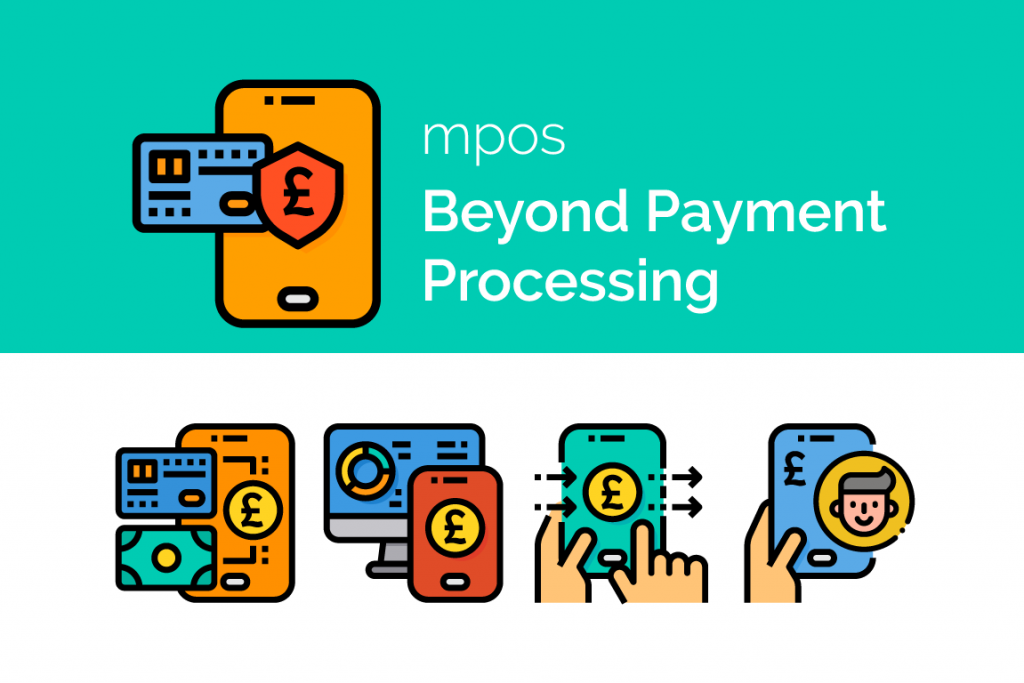
How Mobile Point of Sale (mPOS) Systems Go Beyond Payment Processing Mobile Point of Sale (mPOS) systems are becoming true game-changers in the world of payment processing. With mPOS devices, you can accept payments literally anywhere, using a convenient handheld system. They accept a wide range of payment types and are also popular with customers affording them the option to make payment flexibly in convenient locations in store. Smaller businesses can particularly benefit from mobile Point of Sale systems since it allows them to compress a lot of processing power into a single device with a small footprint. However, businesses of all sizes can make use of mPOS, as the technology also allows a business to scale up flexibly during busy promotional periods and can be used to facilitate social distancing required as a result of COVID-19. mPOS systems go well beyond simple payment processing, with features that can make it far easier to manage a retail business. These are some of the most important features that often go overlooked. Five Extra Benefits From Mobile Point Of Sale Systems 1 – Dedicated devices bring extra durability and convenience Some mPOS systems run on standard consumer-grade phones and claim this is a benefit. However, the actual benefits of this approach are questionable because of two main issues. First, all too often they rely on smartphone cameras for scanning, which can be unreliable. Dedicated devices may also contain integrated card readers so that you don’t have to worry about carrying additional devices and connection issues. Furthermore, handheld units also need to be robust as hopefully they will be in frequent use, not to mention surviving accidental drops. Phones are much less rugged than specialised hardware. A better approach is to utilise robust and dedicated devices custom-built for the purpose. They cost a bit more to lease, but you get dedicated scanners which will be far more accurate and reliable than what are found on smartphones, and hardware that offer you and your customers a superior experience. 2 – mPOS Devices Become Cashflow Management Systems Businesses that are primarily or entirely mobile/digital, without physical holdings, are often challenged to properly track their cash flow. Because mPOS systems link directly into transactional databases, they become an easy way to track cash flow in and out, as well as analyse sales trends. This tracking can, for example, prevent over-or under-stocking on seasonal items by giving business owners all the sales information they need, right at their fingertips. 3 – Collecting And Accessing Customer Information On The Go Another way that mPOS systems go beyond simple payment processing is that they can also be a valuable part of your customer relationship management. Along with payment details, mPOS devices can capture numerous pieces of customer data, instantly adding them to your CRM database for analysis or retrieval. This is particularly important if your business caters to younger buyers like those under 40. These buyers have grown up in an intensely personalised sales environment and expect an “Amazon-style” sales experience whenever possible. Collecting their data with your mobile Point of Sale device allows you to offer customised promotions, personalised coupons, and similar incentives which are targeted directly at each buyer. 4 – Instant Integration With Your Online Systems For businesses running multiple or mixed physical and digital sales channels, tracking inventory and sales can be a complex operation. This is especially true if both physical and digital outlets are pulling from the same stockpool, be that warehouse(s) and/or stores. It’s critical to avoid stocking issues that could delay or prevent deliveries. mPOS devices prevent these sorts of issues because they connect directly to a central inventory database, as well as feeding into the same overall sales data as every other aspect of your business. All data is instantly accessible on the device, allowing for on-the-go monitoring of the state of your business and stocking, no matter the situation. 5 – Having A Backup Plan In Place Finally, one of the most under-discussed benefits of mobile Point of Sale devices is their ability to act as backup systems. What if, for example, the power goes out in your business, or your main digital connection goes down? Your mPOS devices are there, battery-powered, and utilising cellular service rather than a wired connection. They’re an excellent failover option if contingencies have gotten in the way of your daily business. In addition, their portability makes them a great option for a variety of short-term applications. They’re perfect for situations such as pop-up stores, trade show booths or street fairs, where you don’t want to haul major computing equipment around. Having a few mPOS devices allows you a lot of extra flexibility. Get Mobile Point of Sale (MPOS) Software Eurostop is one of the most trusted providers of POS systems in the world, with a variety of software and hardware solutions for every need. Click here to request a free demonstration of our systems!