
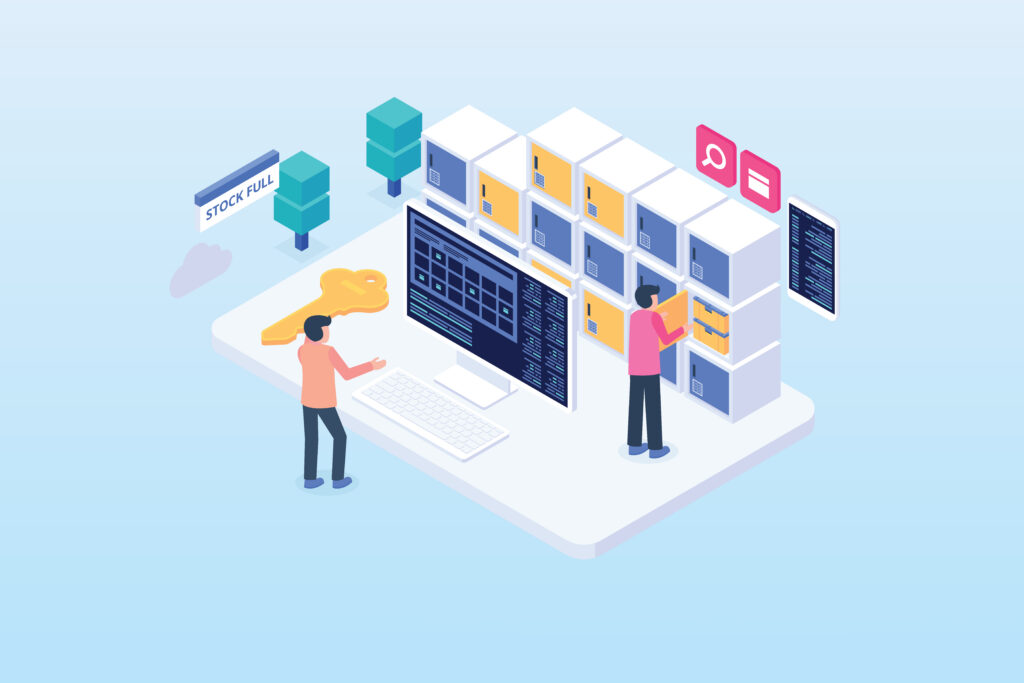
Today’s commerce has blended physical storefronts and digital shops. Businesses aiming for growth face the challenge of managing complex data, logistics, and inventory behind every transaction. To remain competitive, retailers need to move past manual, disconnected processes and adopt a single, streamlined operational method.
The key to this change is a sophisticated retail stock management system. Think of it as an Enterprise Resource Planning (ERP) solution that becomes your business’s central command centre. It connects every part of your operation, from the distribution centre to the cash register.
This guide will explain how consolidating your operations with smart software will boost your efficiency, accuracy, and profitability.
How Does a Retail Inventory Control System Work?
To appreciate the value of a unified ERP, we should first look at how a capable retail stock management system operates. Essentially, the system works by establishing one reliable source of information for every product (SKU) your company handles.
As soon as an item enters your supply chain, it is logged within the ERP. From that moment on, the system monitors its location in real-time. Whether the product is sitting in a warehouse, being shipped to a flagship store, or bought via your e-commerce site, the system updates its status across all selling channels simultaneously.
The integration happens through several important components:
- Centralised Data: Instead of using separate databases for your online shop and your physical locations, a unified system pools all information together. This prevents mistakes like overselling and ensures accurate current stock position, no matter where the customer is shopping.
- Automated Workflows: When product levels drop below a set minimum, the system can automatically create new purchase orders or notify your buying team. This reduces the need for manual inventory checks, which often result in human errors.
- Live Analytics: By collecting data at every interaction point, the system offers immediate insights into sales patterns. This lets retailers respond to market shifts right away, instead of waiting for reports at the end of the month.
By bringing these elements together, a retail stock management system eliminates the internal divisions that typically slow down business expansion, making your operation more flexible and responsive.
Understanding Your Inventory: Types of Retail Stocks
Effective management starts with knowing exactly what products you hold. Not all inventory is the same, and a good ERP lets retailers categorise and manage different stock types to improve cash flow and storage use. In the UK retail sector, most businesses manage four main categories:
Raw Materials and Components
For retailers who produce their own goods or offer customised services, tracking raw materials is crucial. A unified system monitors these parts before they reach the production stage, ensuring that assembly lines never stop because of a missing component.
Work-in-Progress (WIP)
WIP covers items currently in the middle of being made or customised. In retail, examples include products being tailored, engraved, or specially packaged. Tracking WIP is necessary for giving customers accurate delivery timelines and for managing internal labour expenses.
Finished Goods
Products ready to be sold to the final consumer fall into this most common stock type. A reliable retail stock management system ensures these items are distributed across your locations efficiently, placing the right goods where customer demand is highest.
Safety Stock (Buffer Stock)
Given the unpredictable nature of the market, safety stock serves as a crucial safeguard against delays in the supply chain or unexpected increases in customer demand. A smart ERP calculates the perfect amount of safety stock to keep, balancing the need for availability against the risk of overstocking and tying up capital in products that are not moving.
Organising inventory this way enables retailers to apply specific strategies to each group, ensuring that high-value finished goods are prioritised while components are ordered as they are needed.
Why Invest in Retail Stock Management Software
Moving from old systems or spreadsheets to a specialised ERP is a major undertaking, but the benefits often appear right away. Here is why successful retailers are making this technology a priority:
- Better Accuracy and Less Loss
Keeping track of inventory manually always has flaws. Between administrative mistakes, shipping errors, and “shrinkage” (products lost to damage or theft), the financial cost of incorrect data can be enormous. A unified system offers a clear history for every product, greatly lowering the chance for mistakes and flagging problems before they become costly.
- Seamless Multi-Channel Operation
Consumers expect a blended physical and digital shopping experience; they want to check availability online before visiting a store, or buy on the web and return at a physical location. Without a unified retail stock management system, meeting these expectations is nearly impossible. An ERP ensures your website, social media marketplaces, and physical shops all share the same live inventory data, guaranteeing a smooth experience for your customers.
- Improved Financial Management
Inventory is often a retailer’s biggest asset, but it is also difficult to convert quickly into cash. Money tied up in products that sell slowly cannot be used for marketing, expanding, or new product development. ERP software provides the necessary reporting tools to pinpoint which products are “slow sellers” and which are “top performers,” allowing you to discount older stock effectively and reinvest in profitable categories.
- Ability to Scale Operations
When a business expands from one store to ten, or from domestic to international shipping, the operational complexity increases rapidly. A professional ERP is designed to handle growth. It manages the greater volume of transactions and data without needing a proportionate increase in administrative personnel, letting you boost revenue while keeping your overhead expenses low.
- Decisions Based on Data
In the past, retail decisions were often based on intuition. Now, they are driven by facts. A retail stock management system captures detailed information about customer preferences, seasonal patterns, and how well suppliers perform. These insights allow leadership to make smart choices about everything from setting seasonal buying budgets to managing staff levels in stores.
Unifying the Future of Your Business
Successful retail today relies on technology, not just products, to ensure items are placed where they are needed, exactly when they are needed. Adopting a single, unified ERP system, instead of using several disconnected ones, protects your profit margins, keeps customers happy, and builds a stronger business.
When efficiency is the main measure of success, a dedicated stock management solution is essential for any business aiming to be a leader in retail today.
Contact Eurostop for Retail Stock Management Systems Now
Discover how our retail stock management system can transform your operations and drive your business forward.
Contact Eurostop for best-in-class inventory reporting and business intelligence solutions