

 Skip to content

Powering your Stores with the Right Retail Technology to Meet Your Customers’ Needs
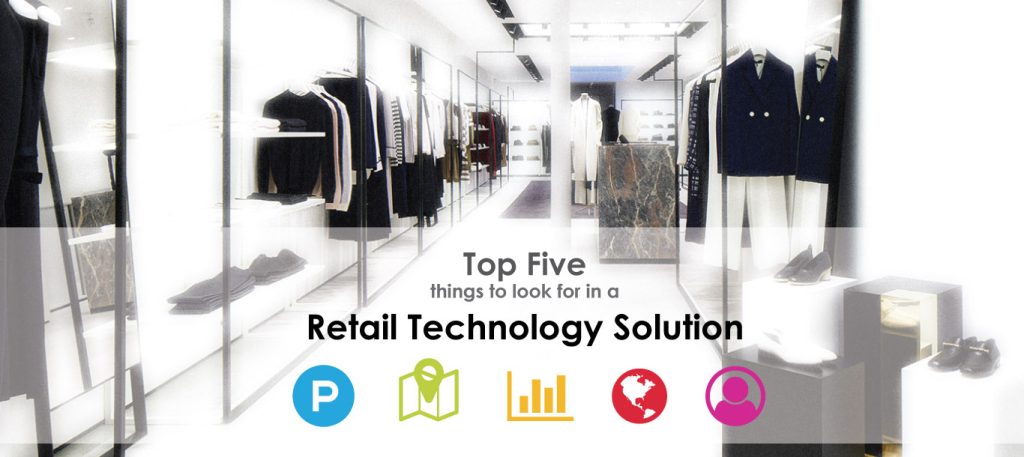
Top Five things to look for in a new EPOS & Retail Management solution Many retailers are finding it a challenge to match their instore experience to the virtual world that is internet shopping. There is a lot for bricks and mortar stores on the High Street or in the Mall to compete with. At the same time, nothing beats being able to see and touch an item of clothing or shoes for real. Although fulfilment options are becoming more advanced every day, with some retailers even offering 1 hour delivery, nothing can beat the immediate gratification of walking out of the store with your new goods in hand. And with the wealth of new technology available, it has never been easier for retailers to make the most of digital innovation in store. By using the right retail technology to provide shoppers with the information and service that they need, retailers that get it right should see their sales soar. Here are our top five things to look for when you are considering new retail technology for your stores and business. Sector specific – Fashion, footwear and lifestyle are sectors where one size certainly does not fit all. The ability to setup and report by product and associated colours and sizes is crucial for managing stock. Holding detailed information about how each range (as opposed to an individual colour or size) is performing means that you have the right information to merchandise accordingly, and give your customers what they want. Connected view of Stock – Providing central visibility of all stock, regardless of channel (i.e. store, concession, online, warehouse, etc.) enables you to manage stock accurately, ensuring that you always have the right stock in the right place at the right time. In order to meet the needs of demanding consumers, retailers need pinpoint accurate stock information. So even if the size or colour isn’t on the rails, the retailer is able to locate the stock, not losing a potential sale. In store consumer apps or digital kiosks may be used to provide this information on demand. Alternatively, staff should definitely be able to check stock across the estate either from an EPOS terminal or mobile device. Detailed drill down reporting – Powerful reporting that generates high level company-wide information helps you to make fast business decisions, based on accurate up to date information. But Managers need to be able to drill down into the detail by department, location, time/week/month/year, product line, etc. to see the granular detail. As well as enabling mangers to take decisions about moving stock, even while out on the go, merchandisers and buyers can see at a glance what lines are doing well, perhaps due to the weather or events, and respond to meet demand accordingly. Scalability and international capabilities – if you are looking to expand your operations you need a system that will grow with you. The right features are also important if you are looking at overseas markets. You will need a solution that can handle differing tax rates and rules, possibly fiscalisation and for the best customer experience, translation. You may also need to handle different prices for different channels. Even if you remain in the UK only, but are looking to attract international clientele, you will need to be able to offer tax free shopping, where the VAT is refunded automatically to their account once they return home. Simple to use – An engaged workforce makes a huge difference to the atmosphere in store. Using systems that are straightforward and intuitive saves time, and minimizes staff training requirements. Empowering staff and consumers with quality information and content can only serve to make the path to purchase smoother. Some great reasons to take another look at your in-store retail technology.
Is Bricks and Mortar in Terminal Decline?
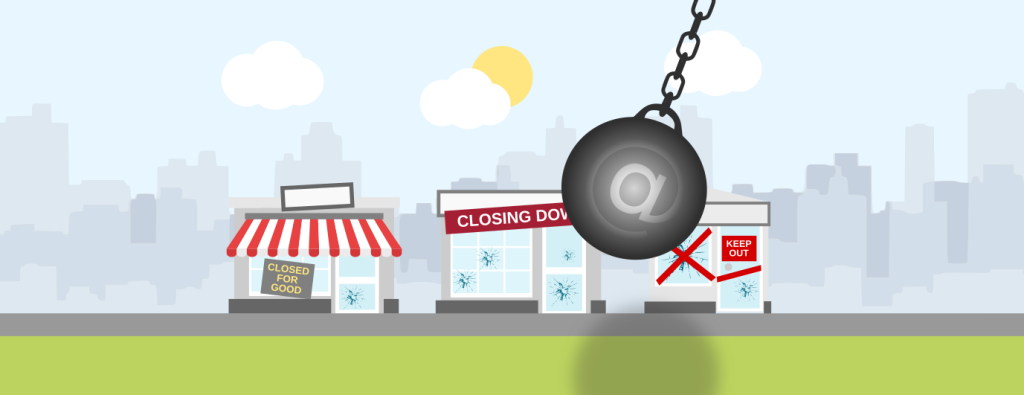
Recently I read this blog about how bricks and mortar retail is in decline. There are some persuasive statistics to back up the byline, but personally I can’t help but feel excited about the potential of what is to come in physical retail spaces, if only retailers can get it right. Digital disruption need not spell the end for bricks and mortar stores. Instead focusing on changing consumer expectation, behavior and needs for a new generation could re-imagine a whole new retail environment, where digital needs to be embraced. ‘Omnichannel ‘ is the buzzword of today, but surely the utopia is where there are no longer perceived ‘channels’ but the physical and digital merge so that all retail touchpoints are one of many on–demand interactions with the brand? The Professor professes to a lack of customer service in traditional stores, and I have to say that as a consumer I do often find this to be true, but why not use digital technology to assist and differentiate, rather than shut them down? why not use digital technology to assist and differentiate, rather than shut them down? As Millennials, also known as Digital Natives or Generation Me, enter their prime spending years,it seems clear that they will drive a ‘Customer centric’ approach to products and services. Surprisingly, the physical store continues to be important in their journey to purchase, they just expect more out of the experience. Retailers need to get to know their new friends, who are described amongst other things, as tech-savvy, impatient, demanding and social. By adapting the in-store experience to suit the wants and needs of the new generation, those retailers will make sure that they stand tall above the rest. The physical store continues to be important in their journey to purchase, they just expect more out of the experience. On the high street there are stories of retailers succumbing to current pressures, but turn right, and you will see shining examples of those who are evolving and changing the status quo with a new level of technology and services. Online retail certainly has choice, convenience and value for money on its side, but shouldn’t retailers build on the unique value proposition of the high street as part of its offering? Better in store customer experiences I stand in awe at the retail giant that is Apple. Their minimalist stores are always packed, and yet upon purchase of one of their items in store, I come away impressed with the service and thought that they have put into the ‘Apple experience’. As I browse and test out the latest devices that are conveniently Wifi connected (I can indeed participate in the worrying trend of ‘showrooming’, or simply check out some online reviews), I can’t help but notice another customer, who has been bought an Apple Watch by her husband as a birthday present. She is not rushed to complete the transaction (by mobile payment, while seated at a bench), but is then offered help in setting up her new purchase. Surely this goes against the grain of serving more customers in less time? I imagine that she will return home excited and show her newly ‘connected’ watch and experience with her friends – the best type of brand ambassador. Embrace the physical space The pure play etailer Missguided has recently opened 2 new stores in the UK. The visual experience in store doesn’t disappoint and is a 3-D extension of their brand persona, brought to life in the physical realm. No longer is a shop just a shop, but an inspiring and entertaining place to be, and you want to go back for more – pop culture language is inherent in all the décor, and talk of unicorns just takes you to a fun place where you might hang out with friends – which they hope you will be. The constant and live stream of fashion inspiration on the immersive digital displays brings the digital and physical world together. It seems like the investment in store design paid off. This online success story now has a place you can visit, why wouldn’t you want to hang out and share on social media? Get to know them There are many other examples of brands that are building relationships with us. In an age where we are no longer limited by geographical boundaries, consumers have endless choice and information at the touch of a screen. Retailers really need to be on the ball in nurturing personalized and engaging relationships with their brand. With a wealth of digital analytics and data available, by implementing the right tools and technology, retailers can get insights into the preferences of their customers and adjust their marketing and promotions accordingly. For example notifying customers of offers that they are likely to be interested in, based on past shopping history. These promotions have to be seamless across physical and digital ‘boundaries’, because the consumer of today expects nothing less. Understand your customers, not only how they like to shop, but their lifestyles and the communities that they live their lives in. Convenience is key and retailers need to determine the preferences of their demographic. For example, if their customer base has a large mobile following who engages on social, they need to make sure that they have a slick mobile app with built in social sharing to the right platforms. Understand your customers, not only how they like to shop, but their lifestyles and the communities that they live their lives in. Right here, right now Millennials have grown up with smart phones. This hyper connected generation always has their devices on hand – accustomed to getting what they want, when they want. This urgency also applies to expectations for services in store. This hyper connected generation always has their devices on hand – accustomed to getting what they want, when they want. Certainly from a personal point of view, I have walked back out of a store, if I see that there